

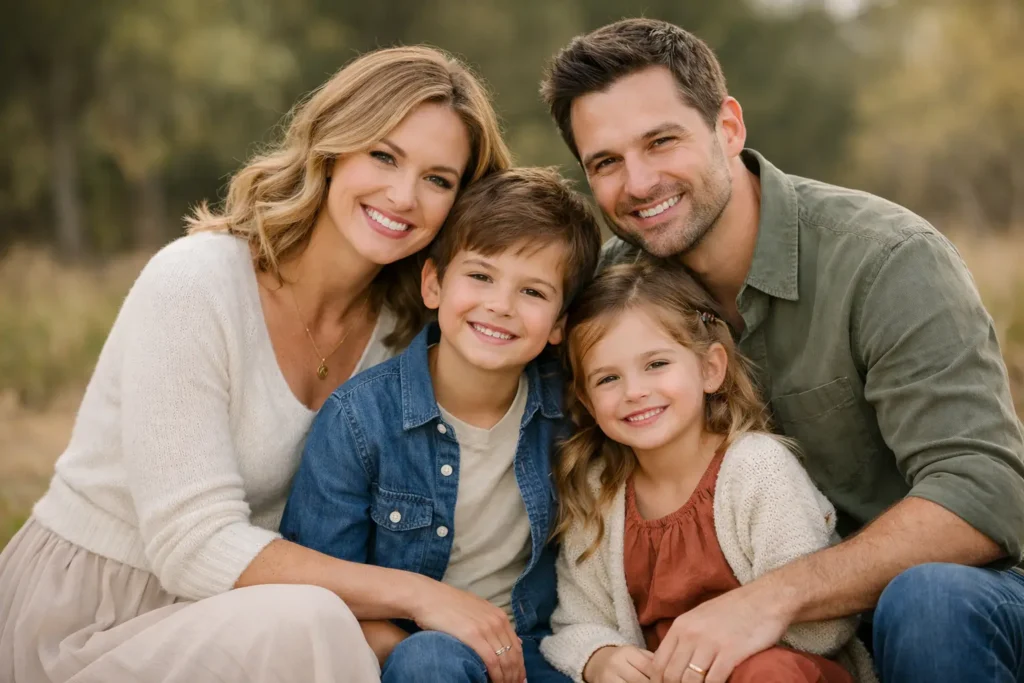
A family portrait should never feel like a clothing catalog. The best outfits for family portraits create a cohesive visual story while leaving room for every person’s personality, age, and energy to come through. When the colors, textures, and fit work together, the focus stays where it belongs: on the laughs, the hand-holding, the proud grandparents, and the expressions that will mean even more years from now.
The goal is not to match perfectly. It is to look connected. A beautifully styled family session feels considered but relaxed, with enough visual harmony to create polished images and enough individuality to make the photographs unmistakably yours.
Start With a Color Story, Not Matching Shirts
The classic white-shirt-and-jeans approach is simple, but it can flatten a portrait, especially in bright outdoor light. A more editorial result begins with a small, intentional color palette. Choose two or three main colors, then add one or two supporting neutrals.
Soft earth tones such as camel, cream, olive, muted rust, and warm brown photograph beautifully in Hudson Valley fields, parks, and fall settings. For waterfront locations around Piermont or the New York metro area, consider misty blue, stone, soft gray, ivory, or sage. In a city setting, navy, charcoal, rich burgundy, and cream can feel polished without competing with the architecture.
One person can wear a subtle print, such as a floral dress, a fine plaid, or a quiet stripe. Everyone else should pull colors from that print rather than introduce several unrelated patterns. This gives the group dimension without making the image feel busy.
Avoid putting every family member in the exact same shade. Matching navy sweaters can be charming for a holiday card, but different tones and textures generally create more depth. Think navy beside soft blue, cream beside tan, or forest green beside muted sage.
Let the Location Lead
Your setting changes what will look natural on camera. A formal indoor portrait can support richer color, tailored pieces, and more dramatic contrast. A sunlit park calls for movement, softness, and colors that complement the landscape rather than disappear into it.
For a Manhattan session, an elegant dress, a structured jacket, tailored trousers, or clean leather boots can add a refined edge. For a relaxed family session in Rockland, Westchester, Bergen, or Orange County, linen, cotton knits, flowing dresses, corduroy, and textured layers often feel right at home.
Season matters, but it does not need to dictate the entire wardrobe. A winter portrait does not require everyone to wear red and green, and a spring session does not need pastel from head to toe. Let the season inspire the palette, then choose pieces that still feel like clothes your family would genuinely wear.
The Best Outfits for Family Portraits Have Texture
Texture is one of the easiest ways to make a photograph look high-end. It catches light gently, adds visual interest, and keeps neutral outfits from feeling plain. Think chunky knit sweaters, linen shirts, soft denim, wool coats, cotton dresses, suede shoes, velvet ribbons, or a child’s cardigan with a subtle weave.
Texture is especially helpful when your palette is simple. A family dressed in cream, tan, and light blue can look beautifully layered when the materials vary. A linen dress, knit sweater, chambray shirt, and cotton trousers will read as intentional in a way that four identical fabrics do not.
Be selective with shine. Small jewelry, a watch, or a polished shoe can be lovely, but highly reflective fabrics and large logos often pull the eye away from faces. The same is true of neon colors, athletic sneakers with bright accents, and graphic T-shirts. They can date an image quickly and may become the first thing you notice in an otherwise meaningful portrait.
Dress for Movement, Especially With Children
Families photograph best when they can move. A session may include walking, sitting close together, lifting a little one, or letting kids run toward the camera. Clothes should support those moments, not create constant adjustments.
For children, choose comfortable pieces they have worn before. A beautiful outfit is not worth a child who is itchy, overheated, or worried about keeping shoes spotless. Bring a backup layer for cooler weather and, for young children, a spare shirt or dress in a coordinating color. It is a small bit of preparation that can save the session after a snack, puddle, or surprise playground moment.
Adults should also prioritize fit over formality. If a jacket feels restrictive, leave it open or choose a softer layer. If a dress needs frequent tugging, it may keep you from relaxing. The camera notices comfort. When you feel at ease, your posture opens up, your smile becomes natural, and the connection between family members comes through more clearly.
Build Around One Standout Piece
If wardrobe planning feels overwhelming, start with one piece you love. It might be a mother’s flowing dress, a child’s floral skirt, a grandparent’s elegant blue jacket, or a patterned blouse that feels special without being overly formal. Use that item as the palette anchor, then build the rest of the family’s looks around its colors.
For example, a soft floral dress with dusty blue, sage, and cream can lead to a navy shirt for one parent, khaki trousers for another, a cream sweater for a child, and warm brown shoes throughout the group. The result looks coordinated from a distance while still feeling personal up close.
This approach also works well for extended families. Rather than asking twelve people to buy one specific outfit, share a palette with a few examples: warm neutrals, blues, and soft greens; or black, camel, ivory, and burgundy for a more formal indoor portrait. Each household can choose what works for them, while the full group remains visually connected.
Choose Shoes and Layers With Care
Shoes are easy to overlook, but they appear more often than expected in full-length family portraits. Clean boots, loafers, simple flats, and neutral sneakers can all work depending on the setting. Try to avoid worn running shoes, flip-flops, or footwear with loud branding unless that casual style is truly part of the story you want to tell.
Layers offer flexibility and shape. A blazer, cardigan, scarf, vest, or lightweight coat can create variation across the session. They also help with New York’s unpredictable temperatures. Choose layers that can be removed without disrupting the overall palette, so your gallery includes both relaxed and more styled looks.
If you are concerned about appearing larger or smaller on camera, avoid dressing everyone in the same silhouette. A mix of fitted and flowing garments creates a more balanced group composition. A photographer can guide posing and placement, but clothing that fits well is always the strongest starting point.
What to Avoid, Without Overthinking It
The point of wardrobe guidance is confidence, not stress. There are only a few choices that tend to distract from a finished portrait: large logos, competing patterns, fluorescent colors, wrinkled clothing, and outfits that make someone feel unlike themselves.
You do not need to buy an entirely new wardrobe for a session. Often, the strongest looks come from favorite pieces that are elevated with thoughtful coordination. Steam garments the day before, try everything on together, and take a quick phone photo of the group in natural light. That simple test can reveal whether a color is too bright, a pattern is too strong, or one person’s outfit needs a quieter layer.
At Michaels Photography, wardrobe planning is part of the creative process, not an afterthought. A little advance direction helps shape a session around your family’s personality, location, and the polished visual finish you want, while leaving plenty of space for real moments to unfold.
Wear the clothes that let you lean in, pick up your child, laugh without checking your sleeves, and recognize yourselves when you look back at the images. That is what makes a family portrait feel timeless.