

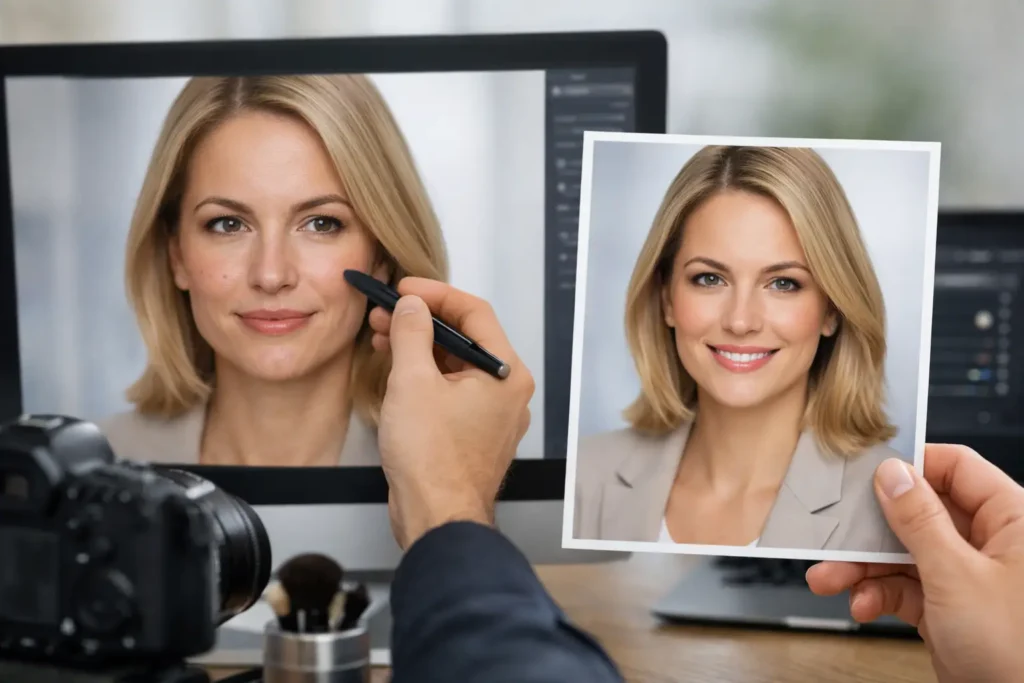
A great headshot should make someone pause because they see you clearly, not because they notice the editing. So, are headshots retouched? Yes, professional headshots are typically retouched, but the best retouching is quiet. It refines the image without changing the person who walked into the studio.
For actors, models, business leaders, performers, and creatives, that balance matters. Your headshot may be the first thing a casting director, agency, client, or prospective employer sees. It needs to look polished enough to feel current and intentional, while remaining honest enough that you are immediately recognizable when you walk into the room.
Are Headshots Retouched in Professional Photography?
Professional retouching is a standard part of a high-end headshot workflow. The camera records every detail with remarkable precision, including temporary blemishes, stray hairs, under-eye shadows, shine, lint, and small distractions that do not represent how you normally look. Retouching helps bring the viewer’s attention back to your expression, eyes, and presence.
That does not mean every headshot should look airbrushed. In fact, overly smooth skin, erased facial character, dramatically altered features, or unrealistic whitening can make an image feel less credible. A polished headshot should still have skin texture. It should still look like your face. A laugh line, freckle, beauty mark, or the texture that gives your expression character may be part of what makes the portrait feel alive.
The goal is not perfection. The goal is a confident, flattering, agency-ready image that feels like you on a very good day.
What Professional Headshot Retouching Usually Includes
Retouching should support the lighting, posing, wardrobe, and direction created during the session. It is not a substitute for them. When a portrait is well lit and thoughtfully photographed from the start, editing can stay refined rather than heavy-handed.
A finished image may include the cleanup of temporary breakouts, redness, dry skin, flyaway hair, distracting lint, and minor shine. An editor may gently soften under-eye darkness, even out an inconsistent skin tone, brighten the eyes with restraint, and reduce visual distractions in the background. Clothing can be tidied, and small details such as a crooked collar or visible bra strap may be corrected when appropriate.
The amount of work depends on the image and the purpose. A corporate headshot often benefits from a clean, natural finish that feels approachable and trustworthy. A fashion or modeling portrait may call for more precise skin work, color refinement, and editorial finishing. An actor’s theatrical headshot usually needs a particularly honest approach, because the image must match the person who appears at an audition.
There is no single retouching formula that suits everyone. The right level is the one that supports your goal while protecting your likeness.
Temporary details versus permanent features
One useful way to think about retouching is to separate temporary details from permanent features. A blemish that appeared the day before a shoot is usually safe to remove. A stray hair across the face or a patch of dry skin may also be cleaned up without question.
Permanent features deserve a conversation. Some people love their freckles, scars, birthmarks, dimples, or facial lines because those details are part of their identity. Others prefer a subtle reduction in certain features. Neither preference is wrong. What matters is being clear before editing begins, so the final portrait reflects how you want to be presented.
For performers, this is especially practical. If a scar, facial feature, or signature look is part of how you are known and cast, removing it can make the headshot less useful. A casting team should not feel surprised when you arrive. The same principle applies to professional portraits: credibility begins with recognition.
Why Retouching Can Look Different From One Photographer to Another
Two photographers can photograph the same person and produce very different finished images. The difference is not only in the camera or software. It starts with creative intention.
Lighting shapes how much retouching an image needs. Soft, intentional light can flatter skin and bring depth to the eyes before any editing happens. Careful posing can minimize tension, create a confident jawline, and help clothing fall naturally. Strong direction also helps clients settle into authentic expressions, which cannot be manufactured convincingly in post-production.
Then comes the editor’s hand. Some styles are ultra-clean and beauty-focused. Others are more cinematic, textured, or documentary in feel. A premium portrait can be highly refined without looking artificial, but the visual standard should match your field. A finance executive may not want the same finish as a beauty model. A dancer updating a portfolio may want energy and detail preserved in a different way than a realtor building a professional brand.
Before your session, share how and where the image will be used. Mention whether you need a LinkedIn photo, casting headshot, agency submission, speaker bio, press image, or portfolio update. That context helps guide wardrobe, expression, composition, and the final retouching approach.
How to Ask for Retouching Without Losing Your Look
The clearest requests are specific but realistic. Instead of saying, “Make me look younger,” describe what is bothering you in the image. You might ask for a temporary blemish to be removed, shine to be reduced, flyaways to be cleaned up, or under-eye shadows to be softened. If you want a feature preserved, say that too.
It is also helpful to distinguish between a concern you want handled in-camera and one that belongs in post-production. A jacket that bunches awkwardly, a necklace that twists, or makeup that looks too reflective can often be adjusted during the shoot. Taking a moment to fix those details is usually better than hoping editing will solve everything later.
Be cautious with requests to significantly alter face shape, body size, teeth, or skin texture. Those changes can be possible, but they come with a trade-off: the more an image departs from reality, the more likely it is to feel dated, uncomfortable, or misleading. A headshot should give you confidence, not create pressure to resemble an edited version of yourself.
At Michaels Photography, the approach is personal from the first conversation through final delivery. Michael works with clients to understand whether the image needs to feel polished and corporate, expressive and theatrical, or editorial and fashion-forward. The retouching is designed to complement the person in front of the camera, not cover them up.
The Best Retouching Starts Before the Camera Clicks
Preparing well can reduce the need for aggressive editing and help your headshot feel more natural. Get enough rest if you can, drink water, and choose clothing that fits comfortably and photographs well. Bring a lint roller, lip balm, powder if you tend to shine, and a few wardrobe options when your session allows for them.
Avoid trying a new facial treatment, haircut, or skincare product right before the shoot. Even a good change can create an unfamiliar look or temporary irritation. If you wear makeup, aim for a version of yourself that feels elevated rather than unrecognizable. Professional hair and makeup can be worthwhile for many clients, particularly for commercial, modeling, and major career updates, but it should still photograph like you.
Most importantly, arrive ready to collaborate. The strongest headshots come from a combination of thoughtful preparation and a relaxed, guided experience. When you feel comfortable, your eyes soften, your posture improves, and your expression becomes more believable. Those are the details that make an image memorable.
A Polished Headshot Should Still Feel Like You
Retouching is not about erasing life from a portrait. It is about removing the small visual interruptions that keep your best qualities from being seen. The right final image has clean detail, flattering color, and a professional finish, while still preserving the energy that makes you recognizable.
When you choose a photographer, look beyond whether they retouch. Ask how they approach it, what they consider natural, and whether they will listen to your preferences. The best headshot is not the one that makes you look like someone else. It is the one that lets the right people see you with clarity and confidence.