
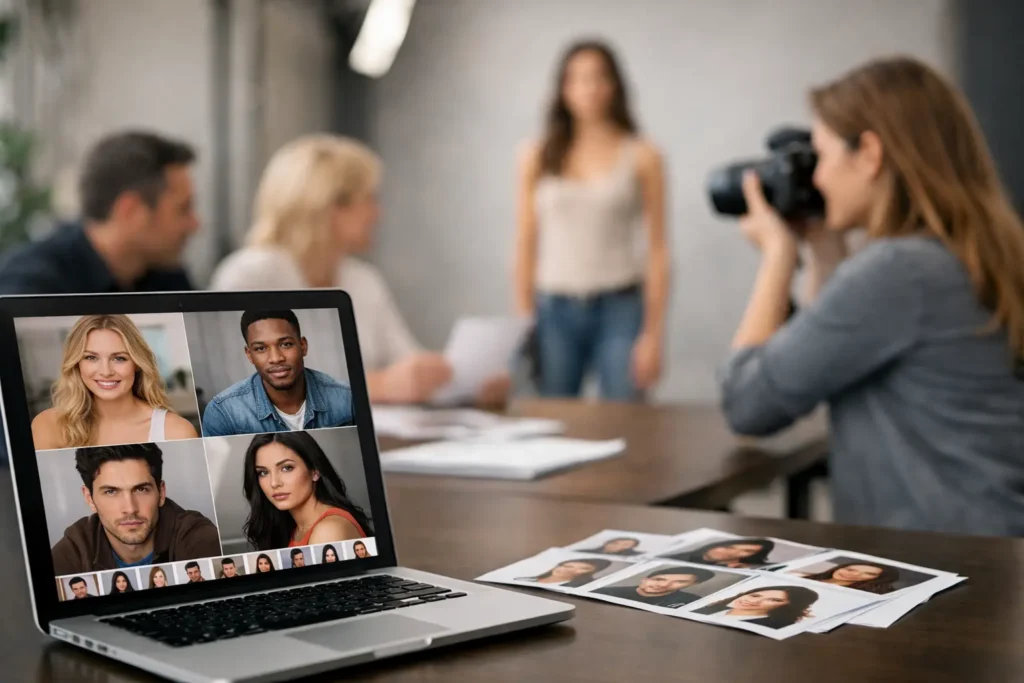
A talent submission is often reviewed in seconds, on a casting director’s screen or an agency assistant’s phone. The best photos for talent submissions make that brief moment count: they show your face clearly, communicate your type and presence, and feel current enough that the person meeting you will recognize you immediately.
That does not mean every image needs to look like a fashion campaign. It means each photo should have a job. A strong submission gives decision-makers an honest, polished first look at the person they may want to represent, call back, or book.
Start With the Submission Requirements
Before planning a wardrobe or booking a session, read the agency, casting notice, or school’s requested materials closely. A commercial modeling agency may want clean digitals. A theatrical agent may prioritize a compelling headshot. A dance program may need movement photographs and a full-body image. Sending beautiful but incorrect images can work against you.
When no guidelines are provided, aim for a small, versatile group of current images: a close headshot, a natural three-quarter or full-length portrait, and a few additional images that reflect your field. Models may include clean digitals alongside more editorial work. Actors may add a second headshot with a distinct but believable casting direction. Dancers should show both personality and technical line without making the submission hard to read.
The goal is not to overwhelm someone with twenty similar frames. It is to make a clear, memorable case for who you are.
The Best Photos for Talent Submissions Are Clear and Current
Casting professionals are looking for potential, but they also need accuracy. Your hair color, length, facial hair, body shape, glasses, and overall look should match how you appear now. If a major change happens after your shoot, update the relevant photos rather than hoping an older image will still feel close enough.
A clean headshot is usually the anchor. Your eyes should be visible, in focus, and connected to the camera. Natural expression matters more than a fixed smile. Depending on your niche, you might need warmth and approachability, quiet confidence, edge, playfulness, or dramatic focus. The best expression is the one that feels like you on a very good day, not a character you cannot sustain in the room.
Lighting should shape the face beautifully while preserving realistic skin texture and detail. High-end retouching can refine a distraction, but it should never erase the features that make you recognizable. Over-smoothed skin, altered eye color, reshaped facial features, and heavy filters create a disconnect between the photo and the person. That is a poor trade-off when trust is central to casting.
Headshots for Actors and Performers
For actors, singers, and performers, a headshot should feel specific without becoming costume-like. A simple top in a color that supports your complexion is usually more effective than a busy print, a large logo, or accessories that compete with your face. The frame should be close enough to show expression and detail, usually from chest or shoulders upward.
A theatrical headshot is not about looking conventionally perfect. It is about being castable. Someone viewing it should be able to imagine you in a role while still seeing a real person with range and presence. A skilled photographer can guide subtle shifts in posture, breath, eye line, and expression so the final selection feels alive rather than posed.
Photos for Models, Dancers, and Creative Talent
Models need images that reveal proportions, movement, and adaptability. A simple full-length photograph with clean styling gives agents a practical view of your shape and posture. Depending on the agency, this may be a straightforward digital with minimal makeup and natural light, or a more polished studio image with professional lighting.
Dancers need more than a beautiful leap. Include at least one image where your face is clear and one where your body line is legible. Technique matters, but so does control. A powerful dance photo captures extension, timing, and intention without losing the detail of the form to dramatic shadows, motion blur, or an overly complicated background.
For musicians, presenters, creators, and other on-camera talent, the same principle applies: lead with a portrait that is unmistakably you, then add images that reinforce your professional world. An editorial portrait can be valuable, provided it complements rather than replaces the essential clean submission photos.
Choose Wardrobe That Supports Your Presence
Wardrobe should frame the talent, not become the subject. Solid colors, thoughtful texture, and a well-fitted silhouette tend to photograph beautifully. Bring options so the final gallery has range: perhaps one relaxed look, one more polished choice, and one outfit aligned with your industry.
For a headshot, avoid anything that dates quickly or covers the neck and jawline in an awkward way. For full-body photos, choose clothing that shows your proportions without feeling overly restrictive. This does not require revealing clothing. A fitted T-shirt and jeans, a sleek dress, tailored separates, or dancewear may all work, depending on the submission and your comfort level.
Makeup and grooming should look intentional but believable. Professional hair and makeup can be worthwhile for editorial portfolio images, while agency digitals often call for a lighter hand. It depends on what the recipient needs to evaluate. If the agency asks for natural, give them natural.
Use a Mix of Clean and Editorial Images
There is a useful distinction between agency-ready and editorial. Agency-ready images are direct, current, and easy to assess. Editorial images create mood, demonstrate range, and show how you photograph with elevated styling and creative direction. Both can belong in a portfolio, but they are not interchangeable.
For a first submission, clean images should lead. Use editorial work as supporting evidence of your potential, especially if you are pursuing fashion, beauty, commercial lifestyle, music, or creative campaigns. If your portfolio is only dramatic, highly retouched, or heavily styled work, the viewer may still be unsure what you look like in ordinary conditions.
At Michaels Photography, sessions are built around the goal behind the images. That can mean crisp digitals for a first agency submission, theatrical portraits for an actor seeking new representation, or a fashion-forward portfolio that still includes the practical shots agencies request. Professional direction is especially helpful when you are new to the camera. You do not need to arrive knowing every angle or expression. You need a clear objective and room to feel comfortable.
Make the Background and Crop Work for You
Simple backgrounds are not boring when they allow the talent to come forward. Neutral studio tones, a clean environmental setting, or an uncluttered outdoor backdrop can all work. What matters is separation, flattering light, and a frame that does not pull attention away from your face or body.
Save the more stylized locations for images where atmosphere is part of the concept. A striking city setting may be ideal for an editorial portrait, but a casting professional should not have to search through architecture, props, or intense color to find you.
Crop with purpose. Your primary headshot should not be so wide that your expression disappears, and a full-body image should show the complete figure rather than cutting at the ankles or knees. Keep the horizon straight and the image refined. Small technical details signal care.
Select Images Like the Person Reviewing Them
After a session, it is tempting to choose the photos where you think you look most glamorous. Instead, ask which images make you feel most present, approachable, and believable. The strongest frame is often the one with a quiet expression and direct connection, not the most dramatic pose.
A good final submission set usually includes variety without confusion. Avoid five photos in the same outfit, against the same background, with nearly identical expressions. Include contrast in framing or mood, but keep your core look consistent. If one image makes you appear like a completely different person, leave it out unless it is specifically serving a character or editorial portfolio.
Before sending, check the file names, sizing, and upload instructions. Use a professional naming format such as Firstname_Lastname_Headshot. If a submission asks for unedited snapshots, do not substitute polished portraits. Following directions is part of showing that you are ready to work.
The right photos cannot promise a booking, but they can make sure your talent gets a fair first look. Choose images that feel current, clear, and confidently yours, then let the person on the other side see the potential that is already there.