

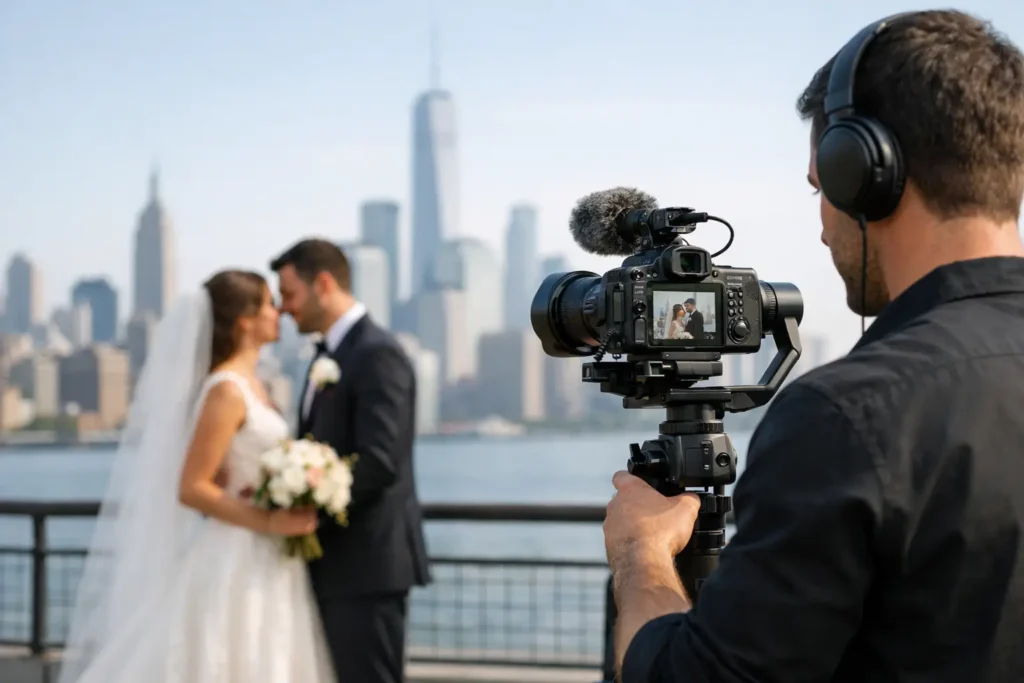
A Manhattan rooftop ceremony at golden hour, a packed dance floor in Brooklyn, a Hudson Valley estate surrounded by family, New York weddings move quickly and hold a hundred meaningful details at once. Choosing the right wedding videographer NYC couples can rely on is about more than finding someone with a camera. It is about inviting an artist into an intimate day and trusting them to preserve the voices, movement, emotion, and atmosphere you will want to revisit for decades.
The best wedding films feel polished without feeling staged. They hold onto the happy tears during a first look, the energy of a grand entrance, the laugh that breaks through a toast, and the quiet glance between two people who finally have a second alone. Finding that balance begins well before the wedding day.
Start With the Feeling You Want to Remember
Before comparing packages or asking about hours, think about how you want your wedding film to feel. Some couples want a cinematic, editorial look with carefully composed portraits, beautiful light, and a dramatic highlight reel. Others care most about documentary coverage: natural reactions, complete speeches, and the unplanned moments that make the day unmistakably theirs.
Most couples want a thoughtful mix of both. A skilled videographer can offer calm direction when it creates a stronger image, then step back when the moment deserves to unfold on its own. That approach is especially valuable in New York, where wedding days can move from a hotel suite to a busy sidewalk, a church, a waterfront, and a reception room with very little downtime.
When reviewing sample films, look beyond the most beautiful shots. Notice whether the couples seem comfortable. Listen to how vows and speeches are incorporated. Pay attention to pacing, color, audio clarity, and whether the film captures the character of each celebration rather than repeating the same formula.
What a Wedding Videographer NYC Couples Need Should Understand
New York presents extraordinary visual opportunities, but it also asks a great deal of a wedding team. A videographer should understand how to work efficiently in tight getting-ready rooms, dim reception spaces, crowded venues, and changing weather. They should know how to use professional lighting with discretion so the evening still feels like your wedding, not a production set.
Local experience also means respecting venue rules, building enough time into a city-day timeline, and staying ready for the unexpected. Traffic changes. Elevators take longer than planned. A ceremony starts late. A sudden rain shower sends everyone indoors. The right professional remains composed, adjusts quickly, and protects the experience you and your guests are having.
That calm presence matters. Couples should not have to wonder whether a key moment was captured. An attentive videographer watches for the father seeing the bride for the first time, grandparents reacting during the ceremony, and friends who turn an ordinary dance floor into a memory. Those moments cannot be recreated after the fact.
Audio Is Not an Afterthought
Beautiful visuals alone do not make a wedding film meaningful. The sound of your vows, the tremble in a parent’s voice during a toast, and the room erupting after a first dance bring the footage back to life.
Ask how ceremony and speech audio will be recorded. Professional coverage often includes more than one source, such as discreet microphones and backup recording, because a single audio feed is never a guarantee. This is one area where experience and preparation are worth far more than a bargain quote.
Lighting Shapes the Final Film
New York reception venues range from sun-filled lofts to candlelit ballrooms. Both can be gorgeous, but both require a videographer who understands exposure, skin tones, and lighting placement. Harsh on-camera light can flatten the mood of a room, while insufficient lighting can leave important moments grainy or difficult to see.
Look for work that feels refined in different environments. A creative, editorial eye should still honor the color and feeling of the venue you selected so carefully.
Ask Questions That Reveal the Experience
A consultation should leave you feeling informed, heard, and more relaxed. Rather than only asking for a price sheet, describe your venue, guest count, ceremony style, and the moments that matter most to you. If you are planning a multicultural celebration, a long traditional ceremony, or multiple locations, share that early. Coverage needs can vary significantly.
Ask what is included in the final delivery. Will you receive a short highlight film, full ceremony coverage, complete speeches, a social-media-ready edit, or several of these? Find out the expected delivery timeline and how the final files will be delivered. Clear expectations prevent disappointment later.
It is also wise to ask about backup equipment, staffing, and the plan if the schedule changes. There is no need for a vendor to promise that nothing will go wrong. A more reassuring answer is one that shows they have prepared for real-world wedding conditions.
Think Carefully About Photo and Video Together
Photography and videography share the same physical space and many of the same moments. When those teams communicate well, your portrait time feels easier and your day keeps moving. When they do not, couples can feel pulled in competing directions.
Whether you hire one creative team or separate professionals, ask how they approach collaboration. The photo and video teams should coordinate during the first look, family portraits, ceremony entrances, and key reception events. Neither should obstruct the other’s work, and neither should make you repeat a genuine moment simply because they missed it.
At Michaels Photography and Videography, the goal is to make the experience feel personal, organized, and genuinely enjoyable. Thoughtful direction helps couples look confident on camera, while candid awareness leaves room for the emotional moments no one could plan.
Choose Coverage Based on Your Day, Not a Standard Package
A smaller city wedding may need only a few focused hours of coverage. A full-day celebration with separate preparation locations, a church ceremony, portrait travel, and a late reception may need considerably more. The best choice depends on your timeline and priorities, not on what another couple booked.
If you care deeply about the anticipation of getting ready, build time for it. If the speeches are central to your celebration, make sure there is coverage through the final toast. If your reception is known for its music and dancing, do not schedule the videographer to leave just as the party finds its energy.
Be honest about your budget, but compare value carefully. Lower pricing can reflect shorter coverage, fewer deliverables, less experienced staffing, limited audio equipment, or a simpler edit. Higher-end coverage should come with visible craft, dependable communication, professional preparation, and a final product that feels considered from the first frame to the last.
Look for Comfort, Not Just Credentials
Technical ability is essential, but your relationship with the person documenting your day matters just as much. You will see your videographer during emotional, sometimes vulnerable moments. You should feel comfortable speaking openly, asking questions, and trusting their guidance.
A good fit is responsive without being pushy, confident without taking over, and attentive without making your wedding feel like a commercial shoot. Read reviews for details about punctuality, patience, friendliness, and how the team handled pressure. Those qualities often determine whether the experience feels smooth behind the scenes.
Your wedding film should not only show what happened. It should bring you back to how it felt: the nervous excitement before the ceremony, the warmth of the people around you, and the joy that made the day entirely your own. Choose the professional whose work and presence give you confidence that those memories will be held with care.