

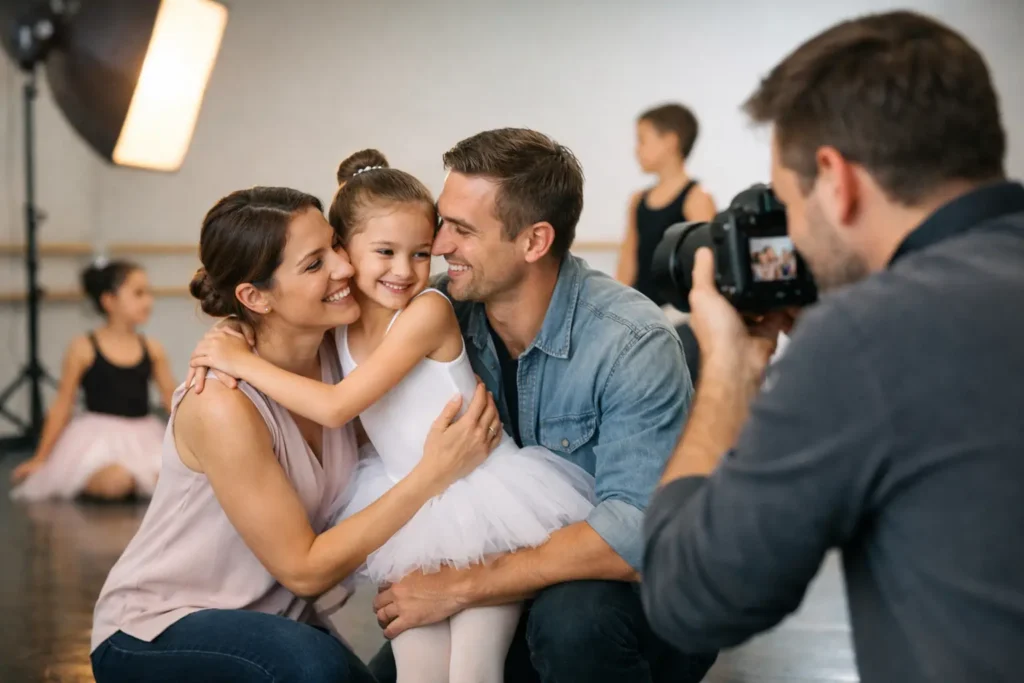
The final bow lasts seconds. The look on a young dancer’s face when they realize their family is cheering for them can last a lifetime, if it is captured with care. Dance school photography is more than lining students up in recital costumes. It is a chance to honor the discipline behind the performance, the personality each dancer brings to the studio, and the pride families feel as they watch real progress take shape.
For a dance school, polished photography also has a practical role. Strong images help fill future classes, elevate recital programs, support social media, and show prospective families the energy and standard of the school. The best approach balances those marketing needs with an experience that keeps dancers comfortable, organized, and excited to be photographed.
What Great Dance School Photography Should Capture
A dance studio has its own rhythm. There are tiny dancers concentrating hard on their first positions, teens refining a demanding routine, instructors offering a quiet correction, and friends laughing between takes. A complete gallery should make room for all of it.
Formal portraits matter because families want a beautiful record of a particular season. They work best when the lighting is flattering, the posing is age-appropriate, and each dancer receives clear, encouraging direction. A strong portrait can feel polished enough for a program or portfolio without making the dancer look overly stiff or unfamiliar.
Action images tell a different story. A leap at its highest point, a clean line in an arabesque, or the sweep of a skirt during a turn brings movement into the frame. Timing is essential, but so is an understanding of choreography. The photographer needs to anticipate the moment rather than chase it after it has passed.
Then there are the unscripted images. A parent adjusting a costume, a dancer taking a breath in the wings, classmates holding hands before they go onstage, these are often the photographs families return to years later. They give a recital gallery heart and help the school communicate its culture of encouragement and connection.
Start With a Photography Plan That Respects the Schedule
Recital day is not the time to decide where photos will happen or how long each group will have. Dance school photography runs best when there is a clear plan for portrait stations, group rotations, stage access, and communication with families ahead of time.
A studio may need individual costume portraits, sibling photos, class groupings, rehearsal coverage, backstage candids, and performance images. Trying to fit every option into one rushed window can leave dancers tired and staff stretched thin. It is usually better to identify the school’s priority images first and build a schedule around them.
For example, a school focused on family sales may choose a dedicated portrait day before the recital. This gives every dancer enough attention and creates a calmer environment for clean, consistent portraits. A studio that needs a fresh marketing library may add class coverage on a regular teaching day, when the interactions and instruction feel natural. Recital coverage can then focus on performances, audience energy, and behind-the-scenes moments.
The right structure depends on the school. A compact program with a single show may have room for a more relaxed portrait experience. A large school with multiple performances needs efficient rotations and a photographer who can work independently while staying aligned with the stage manager and studio team.
Give Families Clear Expectations
Parents are more relaxed when they know what to expect. Before photo day, share arrival times, costume instructions, hair and makeup guidance, and whether ordering will happen before or after the event. Let them know if dancers should bring every costume, wear a cover-up between shots, or arrive fully prepared.
Clear information prevents avoidable delays and helps the experience feel thoughtful rather than chaotic. It also protects the dancers’ confidence. Nobody wants a child to feel rushed because they were unsure which shoes or accessories to bring.
Lighting Makes the Difference Between a Snapshot and a Portrait
Studios and theaters can be visually beautiful, but they are not always easy places to photograph. Fluorescent studio lights may cast uneven color. Theater lighting can create dramatic shadows, bright hot spots, or a stage that feels much darker to the camera than it does to the eye.
Professional lighting brings consistency to portrait day. It helps show the detail of a costume, creates flattering dimension in the face, and keeps images cohesive across different classes and age groups. For individual portraits, lighting should feel refined but natural, with enough shape to create an editorial finish without overpowering a dancer’s expression.
Performance photography has different demands. Flash is often inappropriate during a recital, both for safety and for the audience experience. In those cases, the photographer must understand camera settings, stage light patterns, and where the strongest moments will happen. Fast movement is only half the challenge. Skin tones, costume colors, and the atmosphere of the production still need careful attention in post-processing.
Direction Should Build Confidence, Not Pressure
Many dancers are comfortable performing but become self-conscious when asked to hold a pose for a camera. Younger children may need simple, playful cues. Older dancers may appreciate more specific direction about their hands, chin, shoulders, and eye line.
The goal is never to force every student into the same expression. Great direction helps a dancer look like their best self. It creates elegant lines, brings out genuine confidence, and keeps the session moving at a pace that feels upbeat.
This is especially valuable for dancers building pre-professional or audition-ready materials. A serious ballet student, musical theater performer, or competition dancer may need images that demonstrate technique as well as personality. Those sessions benefit from extra time, thoughtful pose selection, and a creative concept that fits the dancer’s goals. A recital portrait and a portfolio image can overlap, but they are not always the same thing.
Create Images That Work Beyond Recital Weekend
The strongest dance photography serves families first, while also giving the school meaningful visual assets. A carefully planned shoot can provide images for recital programs, lobby displays, enrollment campaigns, teacher spotlights, newsletters, and season announcements.
Avoid relying only on rows of posed students. Prospective families want to see what it feels like to belong at the studio. Include images of attentive instruction, joyful teamwork, expressive movement, and dancers at different ages and levels. A beginner class should feel just as valued as an advanced company rehearsal.
Consistency matters for branding, but every image does not need to look identical. Portraits can be clean and elevated; rehearsal coverage can be warm and candid; performance images can lean into the drama of the stage. Together, they tell a fuller story of the school.
Choose a Photographer Who Understands Both Movement and People
Dance photography asks for more than technical skill. The photographer needs to recognize strong shapes quickly, work respectfully around instructors and performers, and remain calm when schedules shift. They should also know when to step forward for a decisive image and when to stay unobtrusive so the moment can unfold naturally.
Ask how the photographer handles individual portraits, groups, low-light performances, image delivery, and parent ordering if that is part of the plan. Review whether their work shows clean posing, accurate color, crisp motion, and expressions that feel genuine. Just as importantly, consider whether they have a warm, patient presence around children, teens, and busy families.
At Michaels Photography, the approach combines a creative, editorial eye with hands-on direction that helps every dancer feel comfortable in front of the camera. That personal attention is especially valuable on a high-energy studio day, when the best images often come from making the process feel easy and fun.
A beautiful dance photograph does not simply show a costume or a perfect extension. It reminds a dancer that their effort was seen, and it gives families a way to hold onto a season that moved far too quickly.