
A strong fashion image can look effortless, but that feeling is built with purpose. Choosing a fashion editorial photographer in New York means choosing someone who can turn a concept, a garment, and a personality into images that feel polished enough for an agency, a campaign, a lookbook, or a personal portfolio. The goal is not simply to take flattering pictures. It is to create a visual point of view that helps people notice who you are.
New York offers no shortage of striking locations, talented stylists, and ambitious creatives. It also moves quickly. A successful editorial shoot needs a clear plan, confident direction, and room for the unexpected moment that makes a frame feel alive.
What Fashion Editorial Photography Is Designed to Do
Fashion editorial photography is storytelling through style. The clothing matters, but so do the expression, movement, light, setting, color palette, and composition. Together, those details create an image with a mood. It might be clean and contemporary, dramatic and cinematic, romantic and soft, or raw and downtown.
For a model, an editorial session can add range and personality to a portfolio. Agencies and casting teams want to see more than a person who can stand still and smile. They want evidence of presence, versatility, body awareness, and an ability to communicate through a photograph. A dancer may need images that show line and controlled motion. An actor may want a fashion-forward series that complements traditional headshots. A designer or product brand may need visuals that make a collection feel desirable before a customer ever touches it.
That is why a good editorial session begins before the first shutter click. The photographer should ask what the images need to accomplish. Are you submitting to agencies? Refreshing a comp card? Launching a jewelry line? Creating content for a brand campaign? The answer shapes every decision that follows.
What a Fashion Editorial Photographer in New York Brings to a Shoot
New York is visually generous, but a great backdrop alone does not make an editorial image. The real value of an experienced photographer is the ability to shape all the moving parts into a cohesive result.
Creative direction that fits your identity
A mood board can be helpful, but it should be a starting point, not a rigid script. The best concepts make room for the person in front of the camera. If your energy is refined and quiet, the shoot might lean into strong tailoring, architectural lines, and controlled poses. If you are expressive and kinetic, movement, wind, texture, and a more spontaneous pace may suit you better.
Personal direction is especially valuable for first-time models and clients who feel nervous about being photographed. You do not need to arrive knowing every pose. Clear coaching on posture, hands, eye line, facial expression, and movement can transform uncertainty into confidence. Often, the most natural-looking images come after a subject stops trying to perform perfectly and starts responding to thoughtful direction.
Lighting that gives the image a finish
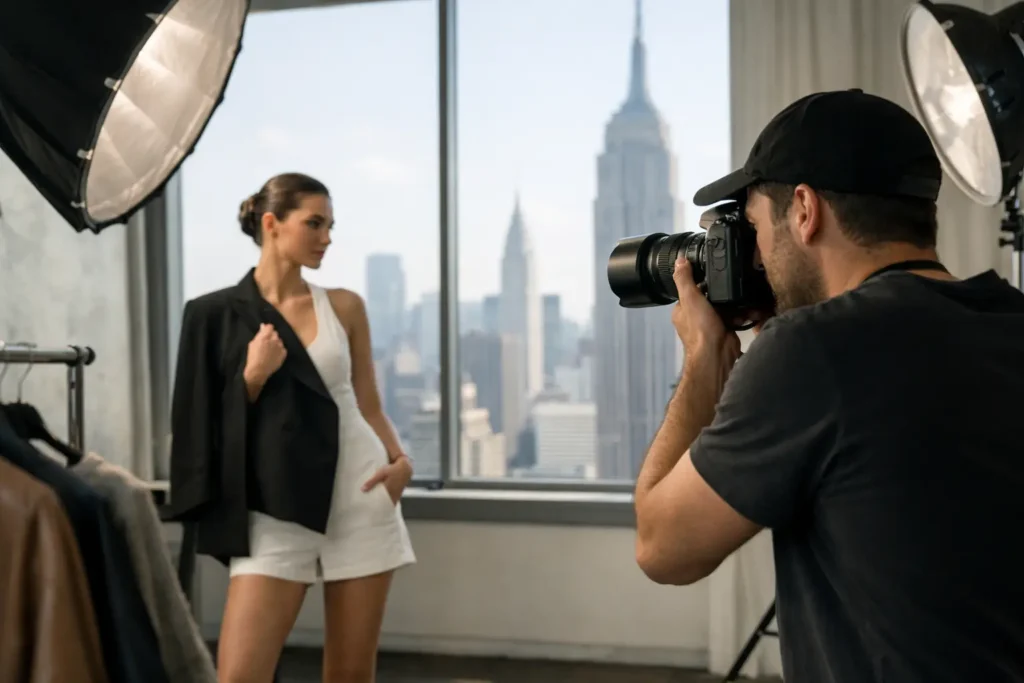
Fashion images live or die by light. Soft window light can create an intimate, skin-focused portrait. Direct flash can bring energy and a modern magazine feel. Studio lighting offers precision, consistency, and control over shadow, especially when photographing a collection or beauty look. Outdoor light can be beautiful, but it changes quickly and requires an experienced eye.
There is a trade-off in every lighting choice. Highly dramatic light can make an image unforgettable, but it may not show every garment detail as clearly as a clean commercial setup. Natural light can feel immediate and authentic, while studio light offers greater control when the weather, schedule, or brand standards cannot be left to chance. The right approach depends on where the images will be used.
A location with a reason to be there
The city can deliver polished interiors, industrial texture, quiet waterfronts, sculptural architecture, and streets that feel unmistakably New York. Hudson Valley locations can bring softness, space, and a different kind of editorial calm. The setting should support the clothes and the concept rather than compete with them.
A bold evening gown against a busy wall of color may create a powerful statement. A minimal look may need a simpler background and cleaner lines. Location scouting is not about finding the most famous place. It is about finding a place that gives the image character without taking attention away from the subject.
Planning Images That Work Beyond Social Media
A beautiful image should also be useful. Before the shoot, think about the places your final photographs need to work: agency submissions, a personal website, social media, a brand deck, print materials, casting profiles, or e-commerce marketing. Each channel has different needs.
For portfolio work, range is usually more valuable than repeating one pose in several outfits. A well-planned session may include clean beauty portraits, full-length looks, movement, detail shots, and a few frames with stronger editorial drama. This gives agents, clients, and creative directors a fuller picture of what you can do.
For brands, consistency is often the priority. The color treatment, framing, lighting, and overall tone should feel connected across the final gallery. A campaign can still have variety, but the viewer should recognize the same visual world from image to image.
Bring clothing with intention. Choose pieces that fit well, photograph well, and allow you to move. Avoid relying on a single outfit unless the brief calls for it. A mix of silhouettes, fabrics, and layers gives the shoot more visual options. If styling, hair, makeup, or accessories are part of the concept, coordinate them early so the final look feels considered rather than assembled at the last minute.
The Shoot Experience Should Feel Focused, Not Intimidating
High-end results do not require a tense atmosphere. In fact, the strongest photographs usually happen when the subject feels comfortable enough to take direction, try something new, and let their personality show.
A thoughtful photographer sets the pace. There is time to check details, adjust a collar, refine a pose, and make sure the lighting is doing what it should. There is also momentum. Too much stopping can drain energy from a fashion shoot, while rushing can lead to missed details and flat expressions. The right rhythm keeps the experience fun and productive.
At Michaels Photography, that hands-on balance is central to the process. Michael works with clients to develop an editorial concept around their goals, then provides calm, practical coaching throughout the session. Whether you are building an agency-ready modeling portfolio, creating fashion imagery for a business, or stepping in front of a professional camera for the first time, the experience is designed to feel personal and encouraging.
Editing Is Part of the Editorial Vision
Retouching should elevate an image without erasing the person in it. Professional editing can refine skin, clean up distractions, balance color, enhance texture, and bring consistency to a set. It can also protect the intention behind the shoot by preserving the mood created through lighting and styling.
The right level of retouching depends on the project. Beauty photography may call for more detailed skin work. A denim campaign might benefit from texture, grain, and a more natural finish. For agency submissions, overly filtered images can work against you. The objective is polished, believable photography that still feels like you.
Fast turnaround matters too, particularly for models updating books, performers preparing submissions, and businesses working on a launch schedule. Quality and speed should support each other. A strong workflow allows you to receive finished images promptly without sacrificing the care that gives them their final professional finish.
How to Know You Have the Right Creative Partner
Look beyond a photographer’s best single image. Review whether their work shows consistency across different people, skin tones, lighting conditions, and concepts. Ask whether they can explain how they will approach your goals. Pay attention to how they communicate before the shoot, because that is often a preview of the experience you will have on the day.
The right fashion editorial photographer will have technical skill, but they will also know how to see you. They should understand when to push for a stronger pose, when to let a candid moment unfold, and when a simple adjustment will make all the difference. That blend of creative instinct and personal attention is what turns a planned session into imagery with real staying power.
Bring the outfit that makes you stand taller, the idea you have been saving, and a willingness to try one more frame. The photograph that gets remembered is often waiting just past the moment you begin to feel fully at ease.