
A fashion editorial is not just a series of attractive outfits photographed in a beautiful place. It is a visual point of view. Learning how to plan fashion editorial work means making deliberate choices before anyone steps in front of the camera, so the final images feel cohesive, elevated, and worth a second look.
For a model building an agency-ready portfolio, a designer introducing a collection, or a creative team producing content in New York City, the goal is the same: create images with a distinct identity. The strongest editorials make people feel something quickly, whether that feeling is polished sophistication, downtown energy, cinematic drama, or quiet confidence.
Start With a Concept That Has a Point of View
The concept is the foundation of the shoot. A mood board full of beautiful images is helpful, but it is not yet a concept. Ask what the story is, who the subject is, and what the viewer should understand in the first few seconds.
A concept might begin with a specific contrast: tailored eveningwear in an industrial Hudson Valley setting, soft romantic styling against modern architecture, or a bold beauty story inspired by a single color. The idea does not need to be complicated. In fact, one clear idea usually photographs better than five competing ones.
Write the concept down in a few sentences before selecting a location or pulling clothes. Include the mood, color palette, styling direction, and intended use of the imagery. A portfolio editorial has different needs than a designer lookbook or a social campaign. If the images need to appeal to modeling agencies, make sure the concept still leaves room to see the model clearly. Styling should support presence, not hide it.
Build a Mood Board With Purpose
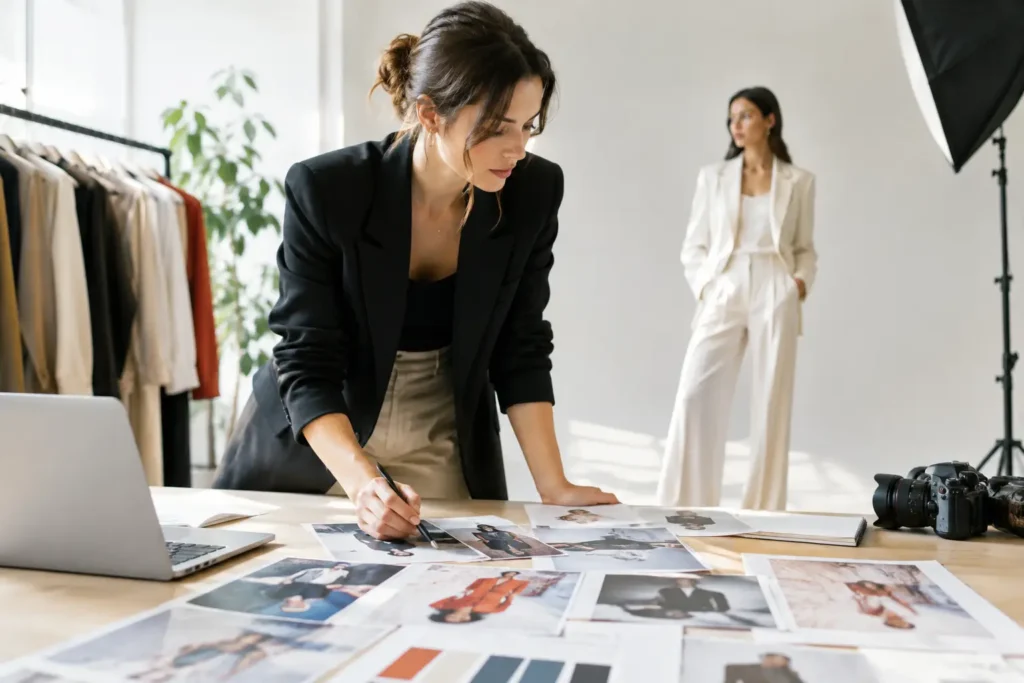
A focused mood board gives every collaborator a shared visual language. Include references for lighting, posing, wardrobe silhouettes, hair, makeup, location, framing, and retouching. It is also useful to include a few examples of what you do not want. This prevents a team from interpreting words like “editorial” or “minimal” in completely different ways.
Keep the board edited. Fifteen to twenty strong references are more useful than a hundred images with unrelated aesthetics. Notice the details that repeat: Is the light hard or soft? Is the posing sculptural or natural? Are the colors saturated, neutral, or monochromatic? Those patterns become your creative brief.
How to Plan Fashion Editorial Styling and Casting
Wardrobe is where the concept becomes visible. Choose looks that create variety while still belonging to the same story. A useful editorial wardrobe often has a beginning, middle, and finish: an accessible first look, a stronger statement piece, and a final look that feels memorable in a portfolio or on a campaign page.
Fit matters as much as fashion. Clothing that looks excellent on a hanger can bunch, pull, or lose its shape when photographed. Schedule time for fittings when possible, especially for structured garments, gowns, accessories, and borrowed pieces. Bring fashion tape, clips, a steamer, lint rollers, and garment bags. These small details protect the high-end finish of the images.
Casting should reflect the project’s purpose. If you are a model, select wardrobe and beauty choices that show range without turning every image into a different character. If you are a brand, cast talent whose movement, proportions, and energy match the clothing and the customer you want to reach. A technically perfect image can still feel disconnected if the person in it does not fit the story.
Hair and makeup deserve an early conversation as well. Editorial beauty can be expressive, but it should photograph intentionally. Discuss skin finish, hair texture, touch-up needs, and any changes planned between looks. A glossy beauty look may need different lighting than a matte, pared-back face.
Choose a Location That Works for the Camera
The right location should strengthen the concept, not compete with it. New York City offers texture, scale, architecture, and fast-moving energy, while the Hudson Valley can offer open landscapes, historic details, riverside settings, and softer natural light. A studio may be the better choice when the clothing, lighting, or background needs complete control.
Before booking, consider practical issues that can change the shoot. Is the location available at the right time of day? Is there enough space for the team, changing, and equipment? Are permits required? What happens if it rains? Is there a clean, private place for wardrobe changes and beauty touch-ups?
Natural light can look effortless, but it is not always predictable. An outdoor shoot may require flexibility, reflectors, portable lighting, and a weather backup. Studio photography offers consistency and a polished editorial edge, particularly when the goal is clean beauty, controlled shadows, or graphic fashion images. Neither approach is automatically better. It depends on the visual story and the level of control the project needs.
Create a Shot List Without Making It Rigid
A shot list keeps an editorial moving forward, especially when several looks, locations, or collaborators are involved. It should identify the essential images first: full-length looks, portraits, detail shots, movement, beauty, and any specific frames needed by a brand or publication.
Do not treat the shot list as a script that eliminates spontaneity. The best fashion moments often happen between planned setups, a turn of the shoulder, a change in expression, fabric moving in the wind, or an unexpected interaction with the location. The list creates structure so there is enough time to recognize those moments.
Plan the order of looks strategically. Begin with something that allows the model to warm up and the team to test the light. Save complicated wardrobe, dramatic makeup changes, or time-sensitive locations for when everyone understands the rhythm of the day. Build in extra time for steaming, changing, travel, and touch-ups. Fashion shoots rarely move as quickly as a schedule suggests.
Give the Team a Clear, Comfortable Plan
Even a small editorial benefits from defined roles. The photographer guides the visual direction and light. The stylist manages the clothing story. Hair and makeup shape the beauty direction. An assistant can keep the set organized, adjust garments, manage equipment, and watch for details that may not be visible from behind the camera.
Send a call sheet before the shoot with the address, arrival time, contacts, parking notes, schedule, mood board, wardrobe plan, and expectations for everyone involved. Clear communication feels professional, but it also makes the experience more relaxed. When talent knows what is happening next, they can focus on expression and movement instead of logistics.
The atmosphere matters. Fashion photography can feel intimidating, particularly for newer models, performers, or clients stepping into a more editorial style for the first time. Direction should be specific, encouraging, and responsive. Rather than saying “be more editorial,” offer a physical cue: lengthen through the neck, soften the hands, shift weight into one hip, or let the coat move as you turn. Small adjustments create confident, natural-looking images.
Leave Room for the Images to Evolve
Preparation gives a fashion editorial its polish, but flexibility gives it life. Light changes. A location reveals a better angle. A particular garment moves beautifully in a way no mood board could predict. When the concept, wardrobe, and schedule are thoughtfully prepared, the team has the freedom to respond to those opportunities instead of scrambling to solve basic problems.
At Michaels Photography, the approach is always collaborative: high-end visual planning paired with personal direction that helps every subject feel comfortable and seen. The final goal is not simply to create fashionable photographs. It is to create a set of images that feels unmistakably like your story, captured with the confidence and editorial finish that makes people stop scrolling.
A well-planned editorial should leave you with more than a folder of strong images. It should give you a clearer visual identity, a memorable creative experience, and photographs you are genuinely excited to share.