

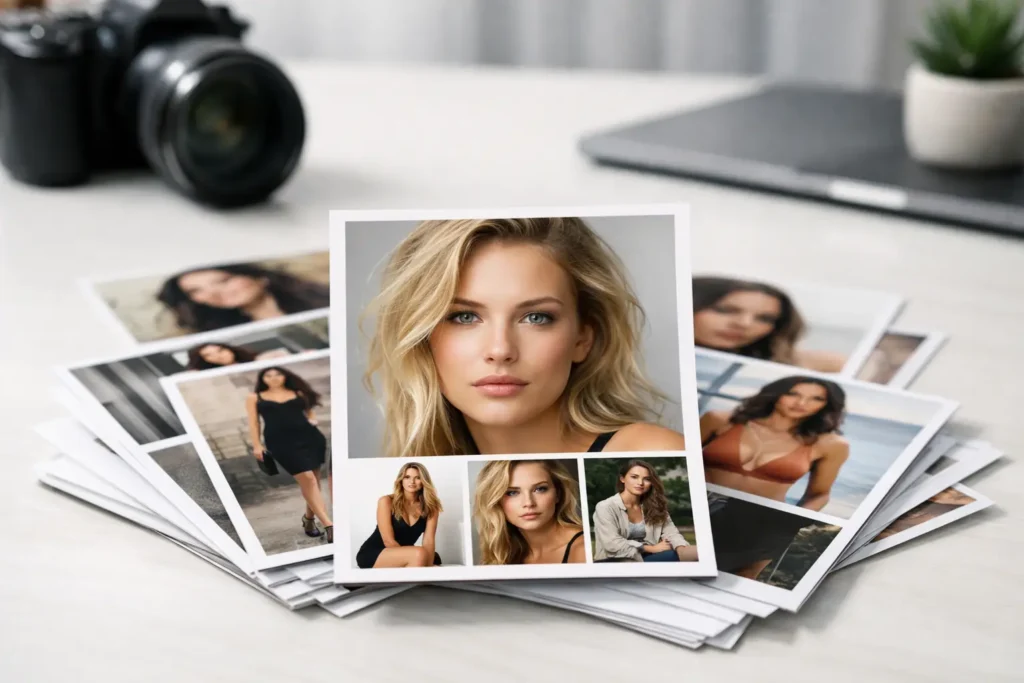
A casting director may look through dozens, sometimes hundreds, of submissions before making a shortlist. In that first quick review, a strong image matters, but so does clarity. The short answer to what are compcards is that they are concise, professionally designed marketing cards that show a model’s look, range, and essential details at a glance.
Also called composite cards, comp cards, or z-cards, these pieces are a practical introduction to your brand as a model. They help agencies, clients, and casting teams understand who you are visually before they meet you, book you, or open a larger portfolio. A great comp card feels polished and simple, with images that make people want to see more.
What Are Compcards Used For?
A comp card is a model’s leave-behind and quick-reference tool. Traditionally, it is printed on sturdy card stock, often in a 5.5-by-8.5-inch format, with a standout portrait on the front and several additional images plus measurements on the back. Digital comp cards are equally common now, usually delivered as a clean PDF or image file that can be emailed to agencies, clients, and casting professionals.
The goal is not to tell your entire story. Your portfolio, website, and social channels can do that. A comp card is designed to make a memorable, immediate impression while providing the practical details a booking team needs. It says, “This is my current look. This is the work I can do. This is how I fit the brief.”
For fashion, commercial, lifestyle, beauty, fitness, and editorial models, comp cards can be requested by agencies and clients during submissions, go-sees, castings, and meetings. They are especially helpful when a client needs to compare talent quickly for a campaign, runway show, e-commerce shoot, or brand presentation.
What Goes on a Professional Comp Card?
There is no single layout that suits every model. An agency may have its own template, and a commercial model’s card can look different from one built for high-fashion editorial work. Still, the strongest cards share a few essentials: current photographs, easy-to-read information, and visual consistency.
The front usually features one high-impact image. This is often a clean beauty shot, a striking three-quarter portrait, or a full-length fashion image that immediately communicates your strongest market. It should be current, well lit, and unmistakably you. Heavy filters, outdated styling, or editing that changes your natural features can create the wrong expectation at a casting.
The back typically includes three to five additional images. Those photographs should show range without becoming repetitive. A thoughtful mix might include a natural headshot, a full-body image, a profile or movement shot, and a more editorial look. For commercial talent, warmth, approachability, and believable expression often matter as much as fashion-forward styling. For editorial talent, pose, silhouette, and a refined visual point of view may carry more weight.
Your name, agency information if applicable, contact details, and relevant statistics are normally included as well. Depending on your market and representation, those details may include height, bust or chest, waist, hips, dress or suit size, shoe size, hair color, and eye color. Keep the information accurate and current. Measurements can change, and booking teams rely on them when considering wardrobe and production needs.
For younger models, dancers, or performers, the information and image choices should be handled with extra care. A parent, guardian, school, or agency may have specific guidelines regarding what is shared and how the card is distributed.
Why Comp Card Photography Needs More Than a Pretty Picture
A comp card is only as strong as the images on it. Beautiful photography is part of the equation, but casting-ready photography also needs to be intentional. The images must show your features clearly, flatter your proportions, and communicate the type of work you want to book.
That requires more than placing a few favorite photos together. A photographer should understand how light shapes a face, how wardrobe reads on camera, and how subtle changes in posture can affect a full-length image. Just as important, you need direction that helps you look relaxed rather than overly posed. The best images feel confident, present, and natural, even when the concept has an editorial edge.
At Michaels Photography, sessions are built around the model’s specific goals, whether that means creating a first agency-ready card, refreshing a working model’s book, or developing images for a new commercial direction. Michael offers clear, hands-on coaching so you are not left guessing what to do with your expression, hands, body, or energy in front of the camera.
Building a Comp Card Shoot Around Your Goals
Before a comp card session, think about the work you want to attract. An aspiring runway model may need clean digitals, elegant full-length images, and a fashion-forward portrait. A commercial model may benefit from approachable lifestyle expressions, contemporary wardrobe, and images that show warmth across different age ranges or settings. A dancer might need motion, line, flexibility, and personality in the same set of photographs.
Wardrobe should support that goal rather than compete with it. Solid colors, clean layers, well-fitting denim, simple tees, tailored pieces, and one elevated fashion look are often more useful than clothing covered in logos or busy prints. Bring options, but avoid treating the shoot as a costume change marathon. A few strong looks photographed with purpose will usually create a better comp card than too many disconnected outfits.
Hair and makeup should feel camera-ready while remaining recognizable. If a casting director meets you next week, they should see the person they expected from your card. This does not mean your images need to be plain. It means the styling should enhance your features instead of hiding them.
Print Comp Cards vs. Digital Comp Cards
Both formats have value, and the right choice depends on how you are meeting clients and submitting for work. Printed cards remain useful for in-person castings, agency appointments, networking events, open calls, and fashion industry meetings. Holding a beautifully printed card can leave a more tangible impression than an email attachment alone.
Digital cards are easier to update and share quickly. They are practical for email submissions, online castings, self-tape packages, and sending materials to a client outside the New York area. Many models benefit from having both: a print-ready design for meetings and a digital file for everyday submissions.
The key is consistency. Your printed card, digital card, portfolio, and social images should all reflect your current appearance and professional direction. If your hair, body of work, measurements, or market has changed significantly, it may be time for an update.
Common Comp Card Mistakes to Avoid
The most common mistake is using photos that are no longer accurate. A card from two years ago may still contain beautiful images, but it is not useful if your hair, body, style, or professional direction has changed. Current always beats nostalgic.
Another issue is trying to show every possible side of your personality in one small format. A comp card needs range, but it also needs a clear point of view. Five images with unrelated lighting, styling, retouching, and energy can make it harder for someone to understand where you fit. Choose images that work together while still showing your versatility.
Poor design can also undermine excellent photography. Tiny text, cluttered layouts, low-resolution files, awkward crops, and inconsistent color treatment all distract from your face and body of work. Let the images breathe. A premium comp card should be easy to scan in seconds.
Finally, do not confuse a comp card with a résumé. Keep the information focused. Your card should make a booking team curious enough to call, not ask them to read a full career history.
When Should You Update Your Comp Card?
There is no rigid timeline, but many working models update their cards whenever their appearance or booking goals shift. A significant haircut, new hair color, changed measurements, improved portfolio quality, or new agency representation are all good reasons to refresh the design.
New talent may update more frequently during the first year because their confidence and body of work can develop quickly. Established models may only need a selective refresh, replacing one or two images that better reflect their current market. It depends on how actively you are submitting and whether your present card still represents you honestly.
Do actors need comp cards too?
Actors often rely more heavily on theatrical headshots, résumés, and casting profiles, but comp cards can still be helpful for commercial actors, performers, dancers, musicians, and talent seeking print, lifestyle, promotional, or brand work. The imagery should align with the jobs you want, not simply follow a fashion-model template.
Can you make a comp card with phone photos?
You can create a basic reference card with phone photos, especially for informal situations or early digitals. But for agency submissions and competitive castings, professional images, intentional lighting, and refined design make a meaningful difference. Your comp card represents you when you are not in the room.
A well-made comp card does not need to be flashy to get noticed. It needs to feel current, clear, and true to the talent you are becoming. Start with images that make you feel confident, then let every detail support the next opportunity you want to earn.