
Agency submissions can be decided in a few seconds. Before anyone reads your measurements, resume, or social following, they see your face, your movement, and whether your images feel current. Searches for “modeling portfolio photographer NYC” usually start with a simple need for better photos. The real goal is bigger: a focused body of work that gives casting teams, agents, and clients a clear reason to picture you in the job.
A strong portfolio does not require you to arrive as an experienced model. It requires a photographer who understands light, knows what the market needs, and can give calm, specific direction throughout the session. The best images feel natural, but they are never accidental.
What a Modeling Portfolio Needs to Do
Your portfolio is not a collection of flattering pictures. It is a professional tool. It should show the range of looks you can credibly deliver while keeping your personality visible from one image to the next.
For new models, the priority is clarity. Agencies want to see your features without heavy editing, complicated styling, or poses that hide your proportions. Clean portraits, simple full-length images, and natural expressions make it easier for a booker to assess your potential. If you have experience, your portfolio can go further, incorporating fashion-forward concepts, beauty work, movement, and images with a stronger editorial point of view.
There is a trade-off. A dramatic, highly styled image can be memorable, but if every photograph is dramatic, a client may not know how you will look in real life or on a straightforward campaign. The strongest books balance polished creative work with approachable, agency-ready images.
A useful portfolio often includes a clean head-and-shoulders portrait, a full-length look, close-up beauty images, a few lifestyle or commercial expressions, and fashion images that show shape and attitude. Dancers, performers, and fitness talent may also need movement work that captures control, line, and energy. The precise mix depends on your target market, not on a one-size-fits-all shot list.
Choosing a Modeling Portfolio Photographer in NYC
New York offers no shortage of photographers, studios, and visual styles. The right fit is not simply the person with the most elaborate set or the busiest social feed. Look closely at whether their work has consistent lighting, thoughtful composition, natural skin texture, and subjects who appear confident rather than frozen.
Most importantly, ask whether the photographer directs. Even talented people can feel uncertain in front of a camera, especially when a portfolio session carries career pressure. Helpful direction is not vague encouragement to “be natural.” It is practical coaching: where to place your hands, how to shift your weight, when to soften your gaze, and how to create a stronger line through the body.
A photographer should also be able to explain the purpose behind each setup. A clean image may be intended for agency submission. A more cinematic portrait may be designed to show personality. A fashion image may help demonstrate that you can carry a designer look. When every frame has a role, your final gallery becomes more useful and far less repetitive.
Location matters, but it should serve the concept. A studio offers control, clean backgrounds, privacy, and consistent lighting. Streetscapes, architectural settings, and outdoor locations can add energy and a sense of place. In NYC, however, an impressive backdrop can easily compete with the model. A good photographer knows when a location adds story and when it becomes visual noise.
Start With the Career Goal, Not the Outfit
Before booking a session, decide what you want the portfolio to accomplish in the next six months. Are you submitting to modeling agencies for the first time? Updating an older book? Moving from commercial work into fashion? Building material for acting, dance, or beauty campaigns? Your answer shapes the styling, location, poses, and edit selection.
An aspiring fashion model may need clean digitals alongside editorial images. A commercial model may benefit from warm, relatable expressions and wardrobe that suggests real-life campaigns. Actors often need a different emphasis, with headshots that communicate casting types rather than fashion range. There is overlap, but treating every talent category exactly the same can leave you with images that look polished yet miss their intended purpose.
Bring wardrobe options that create variety without changing who you are. Solid colors and well-fitting basics are often more useful than busy patterns or visible logos. Include at least one fitted look that shows your shape, one elevated option with personality, and pieces that make sense for your target market. For a high-fashion direction, the styling can become more expressive. For agency digitals, restraint is usually the better choice.
Hair and makeup should support the look, not cover it. This is especially true for first-time agency submissions. Professional grooming can help you look rested and camera-ready, but overly heavy makeup or extreme retouching may create a disconnect between your photos and the person who walks into a casting.
Direction Is What Turns a Session Into a Portfolio
Posing is often the part clients worry about most, and it should not be. You do not need to memorize hundreds of poses before a shoot. You need enough comfort to respond to direction and enough time to settle into the experience.
A well-directed session begins with simple adjustments. Turn the shoulder slightly. Lengthen through the neck. Shift the weight to create a cleaner line. Then it builds toward movement, expression, and a more individual point of view. Small changes can transform a frame, which is why patient coaching matters more than trying to force a pose from a screenshot.
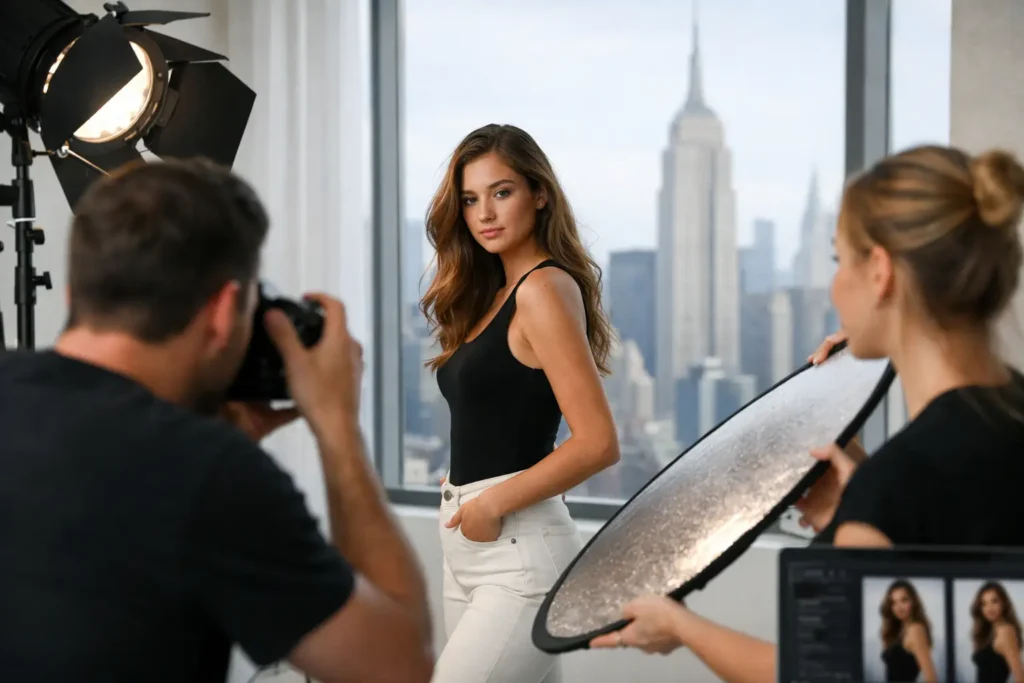
The photographer should watch for details that are easy to miss when you are in front of the lens: tense hands, uneven posture, clothing that has shifted, a chin angle that changes the light, or an expression that feels practiced rather than present. This attention is part of the premium experience. It allows you to focus on connection instead of constantly wondering what the camera sees.
At Michaels Photography, each portfolio session is shaped around the client’s goals, comfort level, and personal visual identity. Michael combines a creative, editorial eye with hands-on direction so emerging and working talent can leave with images that feel polished, authentic, and ready to use.
Why Lighting and Retouching Need Restraint
Great lighting can make a portfolio feel elevated without making it feel artificial. It defines facial structure, separates you from the background, reveals fabric and movement, and creates the mood of an image. Soft, flattering light is often ideal for commercial and beauty work. More sculpted lighting may suit fashion editorials or dramatic concepts.
Retouching should refine the final image, not replace the subject. Temporary blemishes, distracting flyaway hairs, and minor wardrobe details can be cleaned up while preserving skin texture, expression, and recognizable features. The goal is to look like your best self on your best day.
Be cautious of galleries where every image has identical color, identical expression, and identical posing. Consistency is valuable, but sameness is not range. Your portfolio should feel cohesive because it represents you, not because every photograph was made with the same formula.
Build a Final Selection With Purpose
More photos are not always better. A concise portfolio with a clear point of view is easier for an agent or client to scan. Choose images that earn their place by revealing something distinct: your natural smile, a strong profile, your movement, a beauty close-up, or an editorial side that fits the work you want.
Avoid keeping near-duplicates just because you like them both. If two images tell the same story, select the stronger one. It is also wise to get an outside opinion from someone who understands your goals, especially before submitting to agencies. A favorite image can be emotionally meaningful while still being less effective for the market you are pursuing.
Your portfolio will continue to evolve as your experience grows. Refresh it when your look changes, when you gain new skills, or when your current book no longer reflects the clients you want to attract. The right session is not about pretending to be someone else. It is about giving the right people an unforgettable first look at who you are becoming.