
A diamond can look flat. Polished gold can turn muddy. A delicate chain can disappear into a bright background. That is why choosing a jewelry product photographer NYC brands can rely on is about more than taking a clean picture. It is about creating images that preserve the craftsmanship, value, and feeling behind every piece.
Jewelry is one of the most demanding products to photograph well. The camera sees reflections that the eye filters out. Tiny changes in light can alter the apparent color of a stone or make metal look scratched. When the final image needs to perform on a product page, in a campaign, or across social media, every highlight and shadow needs a purpose.
Why Jewelry Photography Requires a Different Eye
A beautiful ring, bracelet, or necklace is built on detail. The cut of a stone, texture of a setting, engraved message, clasp, and finish all tell part of its story. Product photography has to make those details easy to see without making the image feel clinical or overworked.
That balance is especially important for luxury and fashion jewelry. A pure white-background image may be essential for e-commerce, where customers want an honest, close look at what they are buying. But it may not create the desire that moves someone to stop scrolling. Editorial images bring mood, scale, movement, and a point of view to the same collection.
The strongest visual libraries usually include both. Clean catalog images give shoppers clarity. Creative campaign imagery gives the brand personality. One earns trust; the other builds aspiration.
What a Jewelry Product Photographer in NYC Should Solve
New York jewelry brands work in a fast, visually sophisticated market. Your images may appear beside established luxury houses, emerging designers, fashion publications, and beautifully styled independent labels. A basic product shot can communicate what an item is. A considered photograph helps communicate why it is worth choosing.
A professional shoot should solve several challenges at once: controlling reflections, showing accurate color, retaining detail in bright stones and dark metal, creating consistency across an entire collection, and delivering files suited to their final use. These needs can compete with each other. A dramatic image with deep shadows may be perfect for an ad, for example, but less useful as a primary product-page image.
The right approach depends on the collection and the customer. Fine jewelry often calls for refined lighting and exacting retouching. Bold fashion jewelry can support stronger color, unexpected crops, and more expressive styling. Vintage pieces may need imagery that honors their texture and age rather than smoothing away every trace of character.
Light Is What Makes the Piece Feel Expensive
Jewelry photography is largely the art of shaping reflection. Metals do not simply absorb light, they reflect the environment around them. A poorly positioned light source can leave a gold pendant looking gray, while an uncontrolled reflection can hide the face of a gemstone entirely.
Professional lighting creates definition without harshness. It gives a curved band its shape, separates a silver earring from its background, and puts a controlled sparkle into a stone without turning it into a distracting burst of glare. The goal is not to make every surface equally bright. It is to guide the eye toward the most important features of the piece.
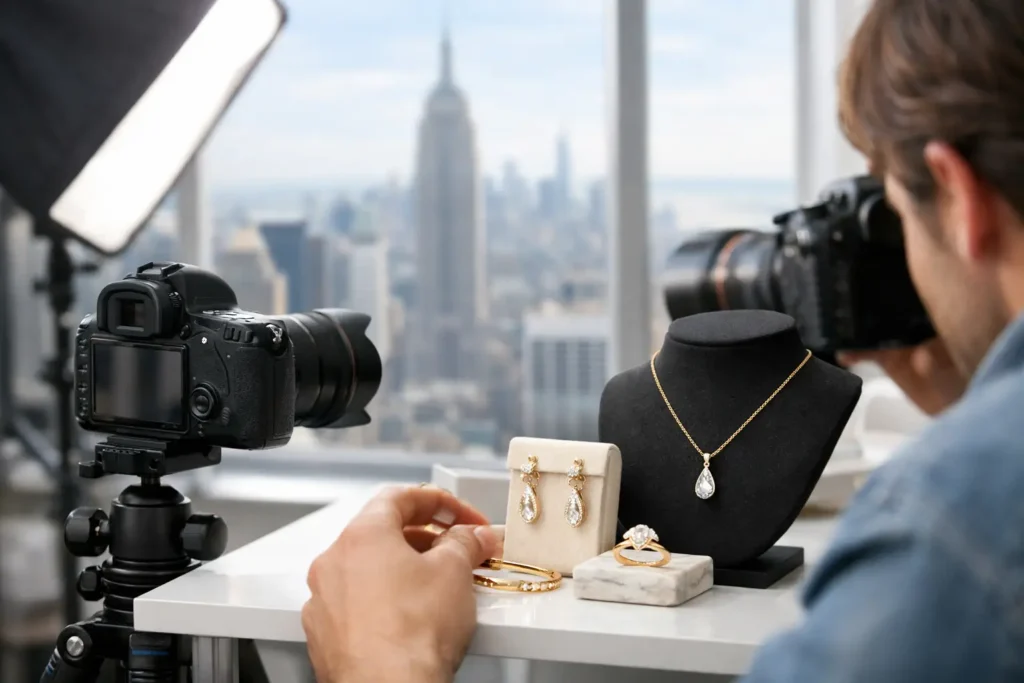
This takes patience. Small adjustments to the angle of a ring, the position of a light, or the surface beneath a necklace can change the final frame dramatically. High-end jewelry photography is rarely about pressing the shutter quickly. It is about noticing what the piece needs and refining the setup until it looks true to itself.
E-Commerce Images Need Clarity First
For online stores, consistency is part of the customer experience. When every product is photographed from a different angle, with different shadows or color treatment, the collection can feel less polished than it really is. Consistent framing and lighting help customers compare pieces confidently and make the brand feel established.
A strong e-commerce set often includes a primary hero image, alternate angles, close-up detail shots, and selected scale images. A necklace may need to be shown both as a complete piece and in close detail so the customer can appreciate the chain, clasp, and pendant. Earrings may benefit from an on-model image that shows proportion and movement.
Accuracy matters here. Over-editing can create disappointment when the product arrives. Retouching should remove distractions such as dust, temporary marks, and unwanted reflections while preserving the actual material, color, and character of the jewelry. The final image should feel elevated, not artificially perfect.
Editorial Jewelry Images Create the Want
Once the product page is covered, editorial photography gives a collection room to breathe. These images can be spare and sculptural, styled with texture and color, or photographed on a model to bring a piece into a lived-in fashion context. The creative direction should always return to the brand: Who is wearing this jewelry? What does it make them feel? Where will they encounter it?
A modern bridal collection might call for luminous skin, soft fabric, and a quiet sense of intimacy. A statement collection could work better with sharp styling, graphic shadows, and confident poses. Even a simple studio setup can feel editorial when the composition, lighting, and crop are intentional.
On-model work adds another layer of collaboration. The model needs direction that feels natural, especially when the focus must stay on the jewelry. A relaxed hand position, turn of the shoulder, or subtle shift toward the light can make the piece visible while keeping the image elegant. This is where an experienced photographer’s coaching helps the shoot stay efficient and comfortable.
Preparing for a Jewelry Shoot
Preparation protects both the jewelry and the final images. Before the shoot, decide where the photographs will be used: product pages, wholesale materials, social campaigns, print ads, lookbooks, or a launch announcement. That decision shapes the shot list, aspect ratios, styling, and amount of creative freedom needed.
Bring each piece clean and organized, ideally grouped by collection, finish, and priority. Extra clasps, chains, matching pairs, and packaging details are worth checking before the session begins. Jewelry is small, and a missing earring back or tangled chain can slow down a carefully planned day.
It also helps to identify the nonnegotiables. If a particular gemstone must read a certain shade, if an engraving needs to be visible, or if a hero necklace will be used in a large print placement, say so early. Clear goals give the photographer room to make smart technical and creative decisions throughout the shoot.
A Smooth NYC Shoot Starts With a Clear Plan
New York offers every possible visual direction, from clean studio work to architectural settings and fashion-forward street imagery. It also brings real logistics: travel time, access rules, weather, limited space, and the pace of a busy production day. A thoughtful plan keeps those details from taking attention away from the collection.
For a studio product shoot, the focus is often precision and efficiency. For a campaign shoot with a model, it may involve coordinating wardrobe, beauty, styling, and a location that supports the concept without competing with the jewelry. Neither option is automatically better. The best choice is the one that serves the brand’s next move.
At Michaels Photography, the process begins with listening to the story a client wants the collection to tell. From there, Michael brings a creative, editorial eye to lighting, composition, and direction while keeping the experience organized, personal, and enjoyable. The goal is always imagery that feels premium and works hard for the business.
Retouching Should Refine, Not Rewrite
The work does not end when the product is photographed. Refined post-processing is where a strong image becomes ready for a website, campaign, or client presentation. This may include cleaning unwanted reflections, balancing tones, correcting minor dust, aligning product color, and ensuring a consistent finish across the full selection.
Still, restraint is a mark of quality. If the jewelry is made by hand, slight variations may be part of its appeal. If a stone carries subtle natural character, removing all of it can make the image feel generic. Retouching should honor the product and protect the buyer’s expectations, not create a version that cannot exist in real life.
Choosing the Right Photography Partner
When reviewing a jewelry photographer’s work, look beyond sparkle. Ask whether the metal has shape, whether the stones retain detail, whether the backgrounds and retouching feel consistent, and whether the images could clearly belong to your brand. A photographer should be able to move between disciplined product work and more expressive campaign imagery when your needs call for both.
Communication matters just as much. You want someone who asks about your launch schedule, intended usage, visual references, and must-have shots before the session starts. Fast turnaround can be valuable, but it should not come at the cost of careful lighting, accurate color, or a finish that supports your pricing and reputation.
The right photograph lets a customer feel the weight of a piece, imagine it against their skin, and recognize the care behind its design. Give your jewelry that kind of attention, and every image can become an invitation to look closer.