
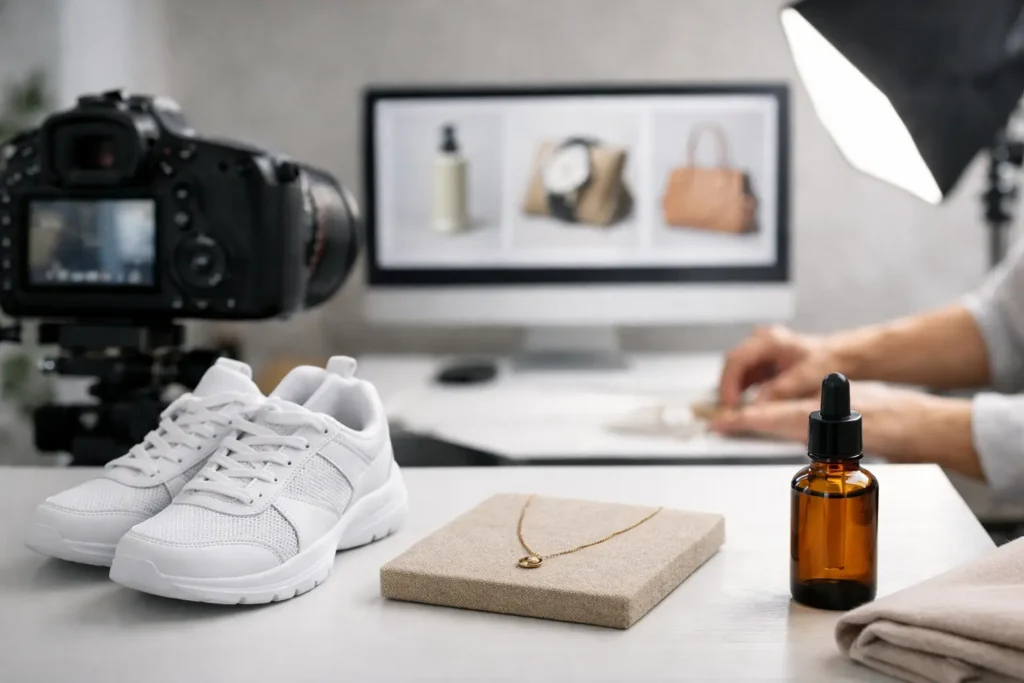
A customer cannot feel the weight of a necklace, test the texture of a fabric, or turn a package over in their hands from a product page. What they can do is study every image. Ecommerce product photography has to answer the questions that would normally be resolved in seconds at a store shelf: What is this? Is it well made? Is it the right size, color, and fit for me? Can I trust this brand?
That is why a polished product image is more than a nice finishing touch. It is a practical sales tool and a direct reflection of how seriously a business treats its products. For New York-area brands competing for attention across websites, social media, catalogs, and marketplaces, the visual standard is high. The strongest photography makes the decision to buy feel clear, easy, and exciting.
Ecommerce Product Photography Starts With Confidence
A clean hero image may earn the click, but confidence is built through the full set of images. Shoppers need enough visual information to understand the product without guessing. This is particularly true for jewelry, cosmetics, apparel, food packaging, accessories, home goods, and any item where material, scale, finish, or craftsmanship affects the purchase.
Consistency matters because it makes a storefront feel intentional. When every product is photographed with different lighting, unrelated backgrounds, or inconsistent crops, customers may not consciously identify the problem, but the brand can feel less established. A unified visual system gives a growing business the presence of a more mature one.
That system does not mean every image should look identical. It means the lighting, color treatment, camera angle, retouching style, and framing work together. A handmade jewelry collection can still feel expressive and editorial while presenting each piece clearly enough for close comparison.
What a Product Image Needs to Show
The first image should make the product immediately legible. On a white, neutral, or carefully chosen brand-color background, the item should be cleanly lit, accurately colored, and framed for the platform where it will appear. A busy setting can be beautiful, but it should never make the customer work to find the product.
From there, additional images should remove uncertainty. A front view may establish shape, while a close detail reveals the clasp, stitching, engraving, texture, or finish. A side or back view answers practical questions. For clothing and accessories, a styled image on a model can communicate fit, movement, and personality far more effectively than a flat lay alone.
Scale is one of the most overlooked parts of the shot list. A compact handbag, a small pendant, or an oversized mug can be misleading when photographed in isolation. Showing the item in hand, on a model, or beside a familiar visual reference helps shoppers understand what they are getting. The goal is not to over-explain. It is to eliminate the little hesitations that can interrupt a purchase.
Studio Images and Lifestyle Images Do Different Jobs
Many brands feel they must choose between crisp studio photography and atmospheric lifestyle photography. In reality, the best approach often uses both, because each solves a different problem.
Studio images provide clarity. They are ideal for product pages, wholesale line sheets, shopping feeds, and anywhere accurate color and consistent presentation are essential. Thoughtful lighting can reveal a reflective metal surface, preserve the softness of knitwear, or show the dimensional shape of a bottle without distracting shadows.
Lifestyle images create desire and context. They help customers picture the product in their own lives: a candle on a welcoming table, a piece of jewelry catching light at dinner, a tote bag carried through the city, or a beauty product becoming part of a morning ritual. These images give a brand emotional range and offer useful material for campaigns, email, and social content.
The trade-off is that lifestyle work requires more pre-production. Props, locations, talent, wardrobe, surfaces, and styling all need to support the product rather than compete with it. A visually dramatic concept can be effective, but only if it still feels connected to the customer and the brand. For a product launch with a limited budget, start with a dependable studio foundation, then add a focused lifestyle set that can be used across marketing channels.
Lighting Is Where Premium Perception Begins
Lighting shapes how shoppers read quality. A poorly lit image can make a luxurious product look flat or make an everyday item appear less trustworthy than it is. Harsh reflections on glass, dull metal, inaccurate fabric color, and shadows that hide important details all create friction.
Professional product lighting is tailored to the item. Highly reflective jewelry may need controlled highlights that define its form without showing every unwanted reflection. Skincare packaging often benefits from clean, soft illumination that keeps labels readable. Apparel needs light that preserves true color and texture, while still giving the garment shape.
Retouching also deserves a careful approach. It should refine distractions, clean up dust, correct small imperfections, and keep the image polished. It should not turn the product into something a buyer will not recognize when it arrives. Accurate color, believable texture, and honest proportions protect customer trust and reduce the risk of disappointment after delivery.
Plan the Shoot Around Where Images Will Appear
A product photo should not be created without considering its final use. An image designed for a square social post may crop poorly for a wide website banner. A marketplace may require a pure white background and specific image dimensions, while an editorial campaign may call for a more cinematic composition.
Before the shoot, identify the channels that matter most: product pages, online marketplaces, wholesale materials, paid ads, social media, print collateral, or a seasonal launch. This simple step helps determine orientation, crops, negative space, and how much visual variety is needed. It also prevents a common frustration: receiving beautiful images that do not fit the places where the brand needs to use them.
A clear shot list is valuable, especially when a collection includes multiple sizes, colors, or variants. It keeps the shoot efficient and ensures that each product receives the same essential coverage. It can also identify the images that deserve more creative attention, such as a flagship item, a new release, or a product with features that are difficult to explain in copy.
The Product Has to Arrive Camera-Ready
Small details become very visible under professional lighting and close-up lenses. Fingerprints on glass, loose threads, crooked labels, wrinkled packaging, and missing components can slow down a shoot and add unnecessary retouching time. Preparing each item is one of the simplest ways to protect the investment in photography.
Bring several samples when possible, particularly for delicate products, apparel, or anything that may be handled during styling. Confirm that labels are final, products are clean, and any inserts, packaging, or accessories are available. If models are involved, make sure sizing, wardrobe, and styling choices have been considered in advance.
Creative direction is just as useful as technical preparation. A photographer can help determine whether the collection should feel minimal, luxurious, playful, natural, or fashion-forward, then shape the set, lighting, and composition around that goal. Michaels Photography approaches commercial product work with that same hands-on attention, combining a high-end editorial eye with an organized, collaborative process.
Build a Library, Not Just a Launch Gallery
One strong product shoot should continue working long after launch day. Rather than thinking only about the immediate product page, plan images that can support future promotions, holiday campaigns, press needs, email headers, and social posts. A few intentional variations in crops, angles, and styling can create a more useful image library without making the shoot feel repetitive.
This is especially valuable for small businesses that need to make every production day count. A well-planned session can deliver clean ecommerce essentials, elevated campaign imagery, close-up details, and vertical social content in one coordinated visual language. The result is more flexibility for the marketing team and a stronger customer experience across every touchpoint.
The right image does not pressure someone to buy. It gives them a clear, compelling reason to believe in what they see. When the product is presented with care, accuracy, and a point of view, customers can spend less time wondering and more time imagining it as part of their lives.