
Your casting profile may be getting clicks, but does it show a casting director who you are before you say a word? An actor portfolio makeover is not about replacing every image with something trendier. It is a thoughtful reset that makes your materials feel current, specific, and ready for the kinds of roles you want to book.
For actors in New York, where a submission can sit beside hundreds of others in a single afternoon, visual clarity matters. A strong portfolio gives an agent, manager, casting office, or creative team an immediate sense of your range, energy, and professional standard. The goal is not to look like someone else. It is to look unmistakably like yourself on your best, most believable day.
When Your Portfolio Needs a Fresh Look
Most performers know when their headshot is outdated. You may have changed your hair, grown into a new type, shifted your style, or simply gained the confidence that comes with more experience. Sometimes the issue is less obvious: the images are technically fine, but they no longer reflect where your career is heading.
An older portfolio can also send mixed signals. A polished theatrical headshot paired with casual, dimly lit lifestyle images makes it harder for viewers to understand your positioning. If you are pursuing commercial work, a warmer and more approachable set of images may be useful. If your focus is theater, television, film, or a character-driven role, your portfolio may need more depth and restraint.
A makeover is especially useful before agency meetings, a new season of auditions, a move to a different market, or a major update to your casting profiles. It can also be the right choice after a period away from performing. The best images should meet you where you are now, not preserve an outdated version of your career.
What an Actor Portfolio Makeover Should Include
A successful actor portfolio makeover starts with strategy, not wardrobe. Before the camera comes out, identify what needs to change and what is already working. Are you trying to attract more commercial auditions? Do you need a stronger leading-player image? Are your current photos all serious, all studio-based, or too similar to one another?
Your updated portfolio does not need to show every possible character you could play. In fact, trying to cover too much can make the collection feel unfocused. It should communicate a clear center while leaving room for range. A casting director should be able to see your natural presence first, then recognize a few believable directions you can take it.
Start with the headshot
Your headshot remains the anchor. It should be current, sharply focused, and genuinely connected. Great lighting and refined post-processing matter, but the image must still feel like the person who walks into the room or appears on self-tape.
For theatrical work, the strongest headshots are often simple and emotionally alive. Your eyes should be easy to read. Your expression should suggest thought, not strain. For commercial work, an open smile or relaxed warmth may be the better fit, depending on your age range, brand type, and market.
Avoid over-retouching. Smoothing every line, changing facial structure, or removing the details that make you recognizable creates a problem at the audition. Professional editing should polish the image while protecting its honesty.
Add character with purpose
Portfolio images beyond the main headshot can show texture, movement, wardrobe personality, and different emotional registers. These are not costume-party photos. They are intentional visual cues that help someone imagine you in a world, a campaign, or a story.
A creative editorial image may support an actor with a fashion-forward edge. A natural outdoor portrait may suit someone whose work leans grounded, approachable, or family-oriented. An urban location can bring confidence and scale, while a quiet studio portrait can emphasize presence. The right choice depends on your casting lane, not on what happens to be popular online.
For dancers, singers, and multidisciplinary performers, carefully directed movement images can be valuable additions. They should feel controlled and expressive, with clean lines and lighting that supports the body rather than distracting from it. One excellent movement frame has more impact than a gallery of nearly identical action shots.
The Difference Professional Direction Makes
Even experienced actors can feel stiff when a camera is pointed at them. That does not mean you are not photogenic. It usually means you need direction that is clear, specific, and responsive to what is happening in the moment.
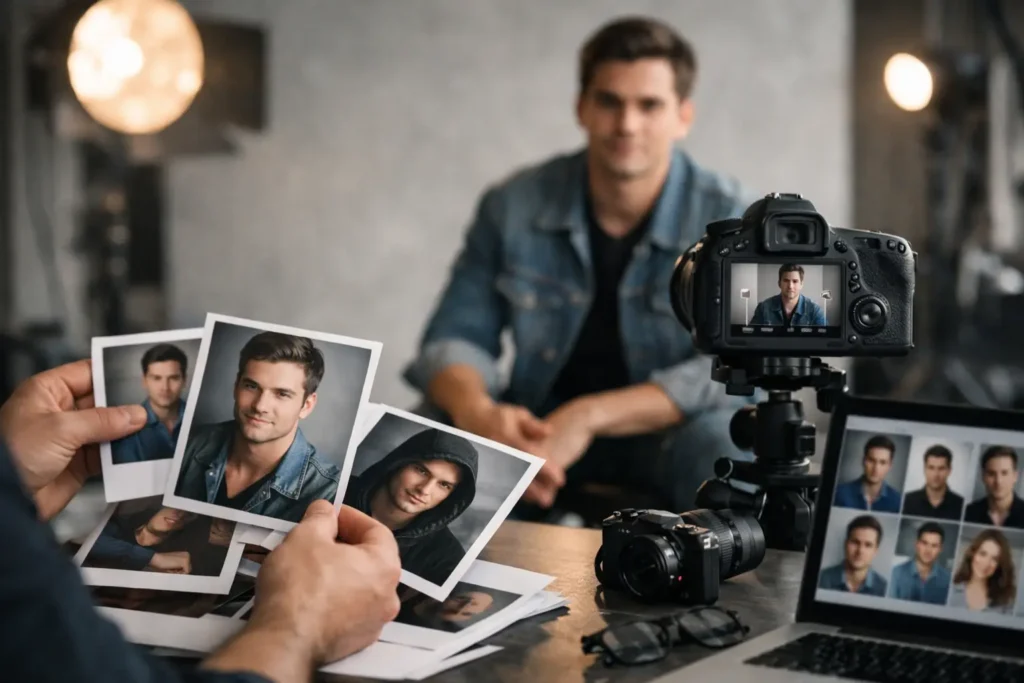
The right photographer notices the small shifts that change an image: a lowered shoulder, a softened jaw, a slight turn toward the light, or a thought that reaches the eyes. Rather than asking you to “be natural,” they create a comfortable space where you can stop performing for the camera and begin connecting through it.
At Michaels Photography, the session is built around that personal attention. Michael takes time to understand an actor’s goals, guide wardrobe and visual concepts, and coach each subject with a creative, editorial eye. The result should feel high-end and agency-ready without losing the personality that makes a performer memorable.
That collaboration is particularly useful for first-time actors, teens preparing for auditions, and working professionals who need a more intentional update. You do not need to arrive with perfect poses or a fully formed concept. You do need a willingness to be guided and an honest sense of the work you want more of.
Planning Wardrobe Without Overcomplicating It
Wardrobe should support your face and type, not compete with either. Bring options, but keep them edited. Solid colors, subtle texture, and well-fitted pieces generally photograph better than oversized logos, very busy prints, or clothing that feels disconnected from your real-world style.
Choose looks that create distinct but believable shifts. For example, one tailored layer and one relaxed top can suggest different parts of your range without making you look like two different people. A commercial actor may want a bright, approachable option alongside something more polished. An actor pursuing dramatic work might select a softer neutral piece and a darker, more structured look.
Fit deserves attention. If you are constantly adjusting a collar, sleeve, or waistband, it will show in your posture. Try everything on before the session, steam it if needed, and make sure it allows you to sit, stand, and move comfortably.
Hair and makeup should also look like a refined version of your everyday self. The camera can handle more polish than a casual day out, but casting teams need to recognize you. A good rule is that the image should still make sense when you step into an audition room the following week.
Editing Your Final Selection
The session is only part of the makeover. Choosing the final images is where many actors weaken a strong shoot by selecting too many photos that tell the same story. A portfolio is more persuasive when every image earns its place.
Start with the image that feels most immediately like you. Then look for supporting photos that add something new: warmth, intelligence, edge, playfulness, movement, or a different but plausible character direction. If two photos have nearly the same expression, background, and wardrobe, choose the stronger one.
Ask whether the images work together at thumbnail size. On casting platforms and agency pages, viewers often scan quickly. Your collection should feel cohesive, but not repetitive. Color, setting, and expression can vary as long as your identity remains consistent.
It also helps to separate portfolio photography from self-tape expectations. Your images can be editorially polished, while your self-tapes should remain straightforward and well lit. Both materials serve the same purpose: making it easy for casting teams to see you clearly.
Make the Update Work Harder for You
Once your new images are delivered, update the places that matter. Replace old photos on casting platforms, agency materials, professional social channels, personal websites, and press kits. Check that your headshot matches your current hair, facial hair, and overall appearance. If it does not, the portfolio will lose some of its value faster than you expect.
A portfolio makeover is not a one-time cure for every career question. Strong images cannot substitute for training, relationships, preparation, or a compelling audition. They can, however, remove a barrier. They make sure the first visual impression supports the work you are ready to do.
Give yourself permission to be seen as the actor you are becoming, not only the actor you have already been. The right photographs can make that next introduction feel more confident, more focused, and much easier for the right people to remember.