

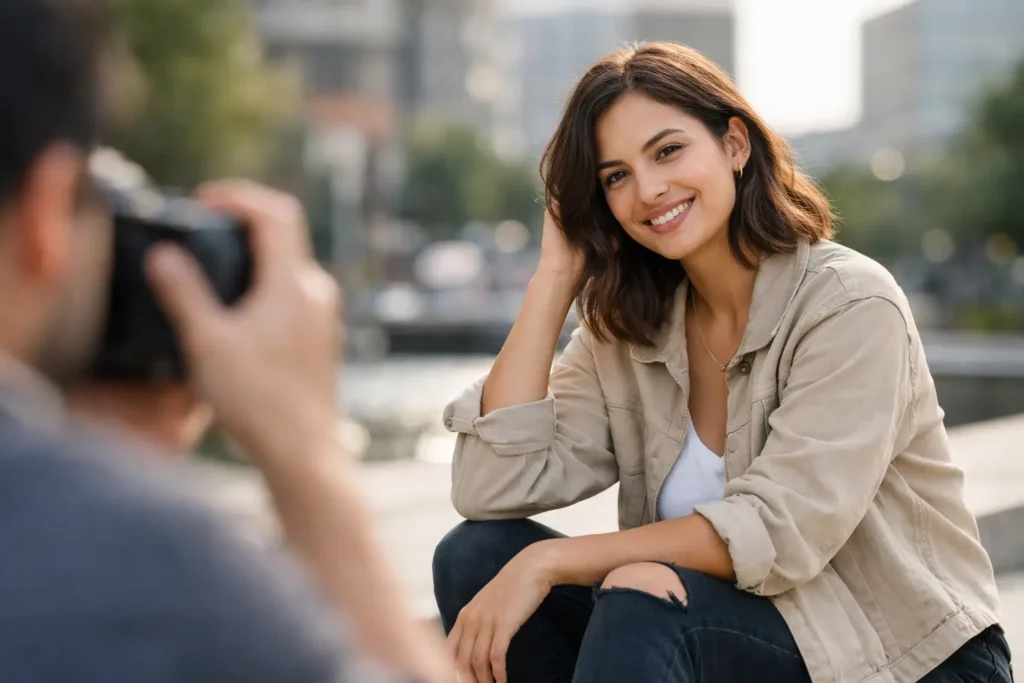
A stiff shoulder, a smile held half a second too long, hands that suddenly seem to have nowhere to go, almost everyone recognizes the feeling. Learning how to pose naturally is not about memorizing model poses or becoming someone else in front of the camera. It is about finding small adjustments that let your confidence, personality, and connection come through.
The most polished images often look effortless, but they are rarely accidental. A good photographer pays attention to light, posture, expression, wardrobe, and timing while giving you clear direction. Your job is simpler: stay present, breathe, and give yourself permission to move.
Start With Comfort, Not a Perfect Pose
Natural photographs begin before the camera comes up. Wear something that fits well and makes you feel like yourself. If an outfit is restrictive, constantly needs adjusting, or makes you self-conscious, that discomfort will show in your posture. For a fashion portrait or agency-ready portfolio, the wardrobe may be more intentional and editorial. Even then, you should be able to stand, sit, and move without fighting the clothing.
Arrive with a little extra time if you can. Rushing into a session from traffic, work, or a busy family schedule can leave your body tense. Take a breath, roll your shoulders back, and let the first few frames be warm-up frames. You do not need to be camera-ready the instant you arrive.
A relaxed pose is usually built from a relaxed stance. Instead of planting both feet squarely and locking your knees, shift your weight onto one leg. Let the other foot soften, turn slightly, or step forward. This creates a more natural line through the body and keeps you from looking like you are standing at attention.
How to Pose Naturally by Using Small Movements
The secret to natural-looking images is movement, not stillness. Rather than holding one position for a long stretch, make subtle changes between frames. Look toward the camera, then just past it. Turn your shoulders a few inches. Take a slow step. Smooth your jacket, touch your hair once, or shift your hands from your sides to a pocket.
These are not big gestures. In fact, smaller is almost always better. A tiny change in your chin angle or the placement of your front shoulder can completely change a portrait. A skilled photographer will watch for the moment when a movement settles into a genuine expression.
For individual portraits, think in a sequence rather than a pose: stand comfortably, shift your weight, bring one shoulder slightly forward, lengthen through your spine, and let your face respond to the moment. This gives the camera variety without making you feel as though you are performing.
For actors, dancers, and models, controlled movement is especially valuable. Your images may need to communicate range, confidence, elegance, or a particular casting type. The goal is still not to force intensity. A clean line, intentional eye contact, and a slight adjustment of the jaw often read more powerfully than an exaggerated expression.
Let Your Hands Have a Job
Hands are one of the most common sources of camera anxiety because people become aware of them all at once. Avoid pressing them flat against your body or clenching them into fists. Give them a simple purpose instead.
Rest one hand lightly near a pocket, hold the edge of a jacket, adjust a sleeve, or let your fingertips graze your hair. If you are seated, place one hand loosely on your leg and allow the other to fall naturally. Keep a little space between your arms and torso when possible, since this creates shape and avoids a compressed look.
With couples and families, hands can express connection. Hold hands while walking, place an arm around a shoulder, straighten a child’s collar, or pull someone into a quick laugh. The gesture does not need to be perfect. It only needs to feel familiar.
Use Your Face Without Forcing a Smile
A natural expression is not necessarily a broad smile in every frame. The right look depends on the purpose of the photograph. A theatrical headshot may call for openness and specificity. A fashion image may benefit from a quieter expression. A family portrait often works best when there is warmth, interaction, and room for real laughter.
The easiest way to avoid a forced smile is to stop trying to hold one. Let the photographer prompt you, talk to the people around you, or think of someone who brings out a genuine reaction. Smile, relax, reset, and smile again when it comes naturally. That brief reset prevents the strained expression people get after saying “cheese” for too long.
Your eyes matter as much as your mouth. Before a close-up, take a slow breath and soften your forehead, jaw, and shoulders. Then focus your attention on a person, a thought, or a point just beside the lens. That sense of focus creates life in your eyes without the need to overact.
Trust Direction, Especially When It Feels Slightly Unusual
What feels natural in real life does not always photograph naturally. A camera flattens depth, and professional lighting changes how angles, shadows, and posture appear. That is why a photographer may ask you to turn your body farther than expected, bring your chin forward slightly, or lift your face toward the light.
These directions can feel small or even a little strange from your perspective. On camera, they often create the relaxed, dimensional result you want. Trust the process, but speak up if something hurts or feels unlike you. The strongest images come from collaboration, not from silently enduring a pose that does not work for your body or personality.
At Michaels Photography, every session is guided with that balance in mind: refined editorial direction, clear coaching, and enough room for your authentic energy to show. Whether you are updating a headshot, creating a modeling portfolio, celebrating an engagement, or bringing three generations together for a family portrait, you should never be left wondering what to do next.
Pose for the Kind of Photo You Need
There is no single “natural” pose for every session. A professional headshot, a wedding portrait, and a product campaign ask for different things.
For headshots, keep your body simple and let your face carry the image. Good posture, a slight turn through the shoulders, and direct or near-direct eye contact are often enough. Avoid overly dramatic hand gestures unless they fit your profession or the intended use of the image.
For modeling and fashion work, create longer lines and more deliberate shapes. Separate your limbs slightly, use angles, and move with purpose. The most successful editorial poses still have energy behind them, they do not look like a collection of disconnected body parts.
For couples, focus less on the camera and more on each other. Walk together, share a private joke, lean in, or pause forehead to forehead. Looking at the camera has its place, especially for a frame you will print and share, but your connection is usually what makes the photograph memorable.
For families, perfection is often the wrong target. Young children rarely want to sit perfectly still, and that is okay. Hold them close, let them explore for a moment, play a quick game, or invite them to tell a story. A beautifully composed family portrait is valuable, but so is the image of a child laughing into a parent’s shoulder.
Avoid the Habits That Make Photos Feel Stiff
Most posing problems come from trying too hard. Locking your knees, sucking in your stomach until you cannot breathe, pinning your arms to your sides, or tilting your chin too high can make an image feel tense. You do not need to hide your body or manufacture a personality for the camera.
Instead, lengthen your posture without becoming rigid. Keep your chin parallel to the ground unless directed otherwise. Exhale before the shutter clicks. If you are unsure what your face is doing, relax it for a second and begin again. A photographer can refine the angle, but no amount of editing can replace the ease that comes from feeling comfortable.
It also helps to remember that not every frame is meant to be the final frame. The in-between moments are often where the best expressions happen: after a laugh, while walking into position, or when you have briefly forgotten about the camera.
The next time you are photographed, do not aim to look posed. Aim to be present, make small movements, and let the person behind the camera guide the details. The image will still be polished, but it will feel unmistakably like you.