
A portrait outfit can look great in your bedroom mirror and still compete with your face once the camera comes out. A collar that sits too high, a fabric that wrinkles quickly, or a bold pattern can shift attention away from the expression and connection that make an image memorable. Knowing how to choose portrait outfits is less about following strict fashion rules and more about choosing pieces that feel like you at your most confident.
Whether you are planning an agency-ready headshot, an engagement session along the Hudson River, a family portrait, or a fashion-forward modeling portfolio, the goal is the same: wear clothing that supports the story without taking it over. The best choices photograph with ease, move well, and give you room to relax into the moment.
How to choose portrait outfits for your purpose
Start with the reason for the photos. A performer’s theatrical headshot, a model’s digitals, and a family’s annual portrait call for different levels of polish and personality.
For actors, singers, and professionals, choose a look that keeps focus on your eyes and communicates the type of work you want to book. A well-fitting solid top, jacket, or simple blouse often photographs beautifully because it lets casting directors see you clearly. Avoid wearing a character costume unless the session is specifically designed around a branded or editorial concept. Your portrait should feel current, credible, and unmistakably yours.
Models and dancers can bring more range. Include one clean, agency-ready look with simple lines, then add a fashion look that shows movement, styling instincts, or a stronger point of view. For dancers, fitted clothing that reveals clean form is often more effective than oversized layers, though a flowing piece can create wonderful motion when it is intentional.
Family and couples’ portraits benefit from a shared visual mood rather than matching uniforms. Think relaxed coastal neutrals, rich autumn tones, classic city polish, or light and airy spring color. The clothing should help the group feel connected while allowing each person to look and feel like themselves.
Put fit ahead of the label
The camera notices fit. Clothing that pulls across buttons, bunches at the waist, slides off the shoulder, or hangs too loosely can distract from an otherwise beautiful image. Bring pieces you have already worn, not an unfamiliar outfit with the tags still on.
A good portrait outfit should let you sit, walk, raise your arms, and turn without constant adjustment. This matters especially for children, couples, and anyone who is nervous in front of the camera. Comfort is not a compromise on style. When you are physically comfortable, your shoulders settle, your expression softens, and the images feel more natural.
Tailoring can make a major difference. A jacket with sleeves at the right length, pants that break cleanly, or a dress that fits smoothly through the torso will read as more polished than a more expensive piece that does not fit well. If an outfit is almost right, simple alterations are often worth considering before the session.
Choose color that brings attention back to your face
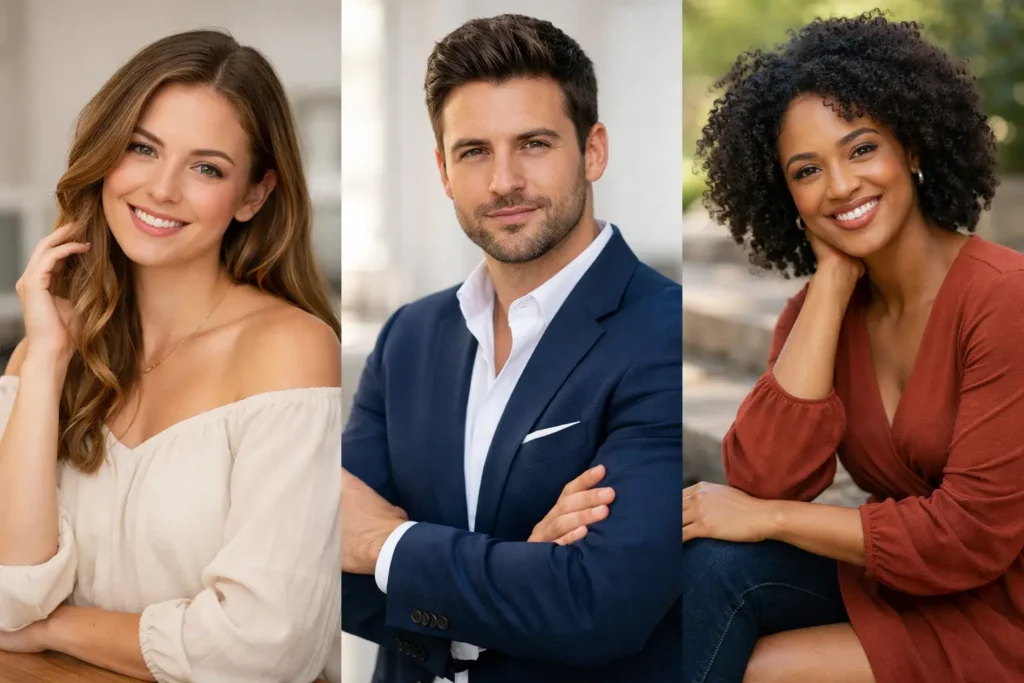
Color affects mood, skin tone, and how a portrait holds attention. Solid colors are usually the easiest place to begin because they keep the image clean and timeless. Jewel tones such as deep blue, emerald, burgundy, and plum can add richness, while cream, camel, soft blue, sage, and dusty rose can create a lighter, more understated feeling.
The right shade depends on your complexion, hair color, setting, and the intended style of the shoot. There is no universal rule that everyone should wear bright colors or neutrals. A black outfit can look sophisticated and striking in a dramatic editorial portrait, for example, but it may feel heavy for a sunlit family session. White can be fresh and beautiful, but pure bright white sometimes reflects light onto the face or loses detail in a high-key setting. Off-white, ivory, and soft cream are often gentler alternatives.
Try to avoid neon colors and highly reflective fabrics unless they are part of a deliberate fashion concept. Neons can cast unwanted color onto skin, while shiny materials may catch light unpredictably. If you love a vivid color, use it in a flattering, matte fabric and balance it with simpler accessories.
Use patterns and logos with intention
Patterns are not off-limits, but they require more care than solid colors. Fine stripes, tiny checks, and dense repeating prints can create visual distortion on camera, particularly in digital images. Large graphic logos, visible slogans, and recognizable brand marks can date a portrait quickly or pull attention away from the person in the frame.
A single patterned dress, scarf, or textured shirt can add personality, especially in a family session. The key is to give it breathing room. If one person wears a print, the others can wear colors pulled from it in solids or subtle textures. This creates depth without making the group look overly coordinated.
Texture is often a better way to add visual interest. Denim, linen, knitwear, suede, velvet, and structured cotton can photograph beautifully because they create dimension without visual noise. Consider the season and location, too. A cozy knit has a different emotional effect in a fall park than it does in a sleek studio portrait.
Coordinate a group without dressing alike
For families, couples, and teams, select a color palette of three to five complementary shades instead of choosing one identical outfit for everyone. Begin with one piece you love, perhaps a dress, patterned blouse, or favorite jacket, then build around its colors. Add variation through tone and texture: navy with soft blue and cream, or olive with rust, tan, and charcoal.
Keep the level of formality consistent. If one person is in a formal cocktail dress and another is in athletic sneakers and a graphic tee, the visual difference may feel accidental. That does not mean everyone must be dressed up. A relaxed, stylish group can look wonderful, as long as the choices feel like they belong in the same world.
Pay attention to shoes. They appear more often than clients expect, especially during outdoor and full-length portraits. Choose clean footwear that suits the outfit and setting. For young children, prioritize shoes they can walk and play in comfortably. Forced smiles are rarely worth a pair of stiff dress shoes.
Plan for the location, light, and season
Your setting should influence the outfit, but it should not dictate it completely. In a New York City streetscape, tailored layers, a coat, boots, or a refined monochrome look can feel at home. A Hudson Valley field or riverside location may call for softer fabrics, warm layers, and colors that stand apart from the landscape rather than disappearing into it.
Consider how weather affects the experience. In colder months, choose a beautiful outer layer instead of assuming you will take your coat off. A structured wool coat, elegant scarf, or textured sweater can become part of the portrait. In summer, breathable fabrics help you stay composed, while layers can be added selectively for variety.
Studio lighting also reveals details differently from daylight. Bring undergarments that work with each outfit, including a strapless or seamless option if needed. Test lighter garments in daylight before the session to make sure they are not more transparent than expected.
Bring options, but do not overwhelm yourself
Two or three thoughtfully selected looks usually provide more value than a packed suitcase of maybes. Start with the outfit that makes you feel most like yourself, then add contrast. For example, an actor might bring one approachable, casual look and one more polished option. A couple might begin in relaxed daytime clothing and change into something slightly dressier for later light.
Lay each look out completely before the shoot: clothing, shoes, layers, jewelry, and any accessories. Take a quick phone photo to see how the colors work together. Remove anything that needs constant fixing, has visible wear, or makes you hesitate. Confidence often comes from reducing decisions before you arrive.
At Michaels Photography, creative direction is part of the experience. Michael can help you narrow down options, suggest what will complement the location and lighting, and guide you into poses that make each outfit look its best. You do not need to arrive knowing exactly what to do in front of the camera.
Let the outfit support the feeling you want to remember
The most successful portrait outfits do not make you look like someone else. They make it easier to recognize yourself in the final images: relaxed, elevated, connected, and fully present. Choose the colors and silhouettes that let your personality come through, then leave room for the moments that cannot be styled, a child leaning into a parent, a laugh between partners, or the confident expression that finally feels like the real you.