

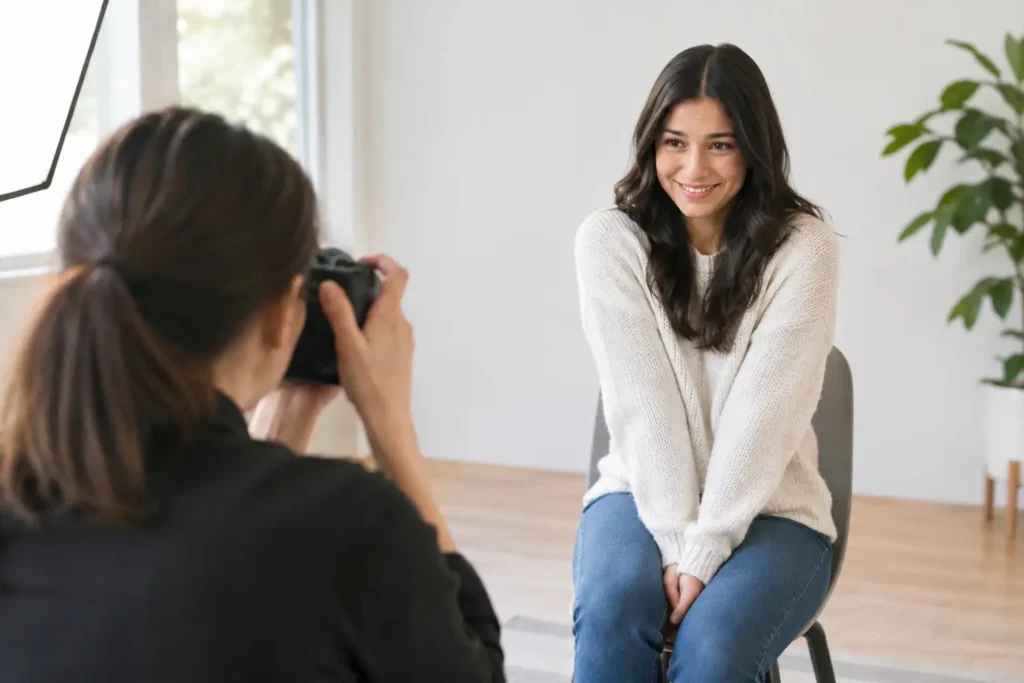
The first few minutes of a photo shoot can feel long when you are convinced the camera sees every awkward hand placement, forced smile, or nervous breath. Nervous subject photography is not about asking someone to “relax” and hoping for the best. It is about creating enough comfort, clarity, and momentum that real confidence has room to appear.
Whether you need an agency-ready portfolio, a theatrical headshot, an engagement session, or family photographs you will keep for generations, you do not need to arrive knowing how to pose. A polished final image often begins with a photographer who knows how to guide the person in front of the lens.
Why People Feel Nervous in Front of a Camera
Camera nerves are remarkably common, even among people who appear confident in daily life. For some, it is the pressure of needing professional images for an audition, modeling submission, business launch, or major milestone. For others, it is simply unfamiliar territory. They may have spent years taking quick phone photos while avoiding formal portraits altogether.
The discomfort is rarely just about appearance. Being photographed can feel personal. You are being asked to slow down, be visible, and trust that someone will represent you well. That is why technical skill matters, but personal attention matters just as much.
A great session does not treat anxiety as a flaw to correct. It recognizes that comfort is part of the creative process. The right pace, clear direction, flattering lighting, and a few genuine laughs can change the energy of an entire shoot.
Nervous Subject Photography Starts Before the First Frame
The best way to make a camera-shy subject comfortable is to remove uncertainty before the session begins. When clients know where they are going, what to wear, how long the shoot will take, and what the photographer needs from them, they can arrive focused on the experience rather than the unknowns.
For portrait clients, preparation should be specific without becoming restrictive. Bring a few outfits that feel like the strongest version of you, not a costume you can barely move in. For headshots and modeling portfolios, clothing should support your casting type or personal brand without competing with your face. Families should coordinate colors and textures rather than match every detail exactly. The goal is visual harmony and genuine ease.
It also helps to talk through the purpose of the images. A dancer updating a portfolio needs a different rhythm than a couple celebrating an engagement. A business owner creating brand images may want a polished editorial look, while a parent may care most about the spontaneous glance between siblings. When the creative goal is clear, direction becomes more natural and the subject has a reason to trust the process.
Direction Is Better Than “Just Be Natural”
“Be natural” sounds simple, but it can leave a nervous person wondering exactly what to do with their face, shoulders, hands, and feet. Strong photography direction is not stiff or overbearing. It gives subjects an easy starting point, then leaves room for their personality to come through.
A photographer may begin with small adjustments: turn one shoulder slightly, shift your weight to the back foot, lower the chin a touch, bring the hands into a relaxed purpose. These details are especially helpful in professional headshots, fashion portraits, and commercial work, where posture and expression must read clearly in a single frame.
Then comes movement. Walking slowly toward the camera, adjusting a jacket, looking away and returning, or sharing a quick thought with a partner can release the tension that shows up in frozen poses. Movement gives the body something to do, which often gives the mind permission to stop overthinking.
For children and families, the same principle applies. Asking a child to sit perfectly still can create resistance. Giving them a simple game, a reason to lean in close, or a moment to interact with a parent produces more authentic expressions. The photograph becomes less about performing for the camera and more about being together.
Small Prompts Create Real Expressions
The most natural smiles are rarely created by repeating “smile” ten times. Conversation helps. So do prompts that encourage a reaction: think of the person who makes you laugh, look at your partner as if you are about to share a secret, or take a breath and let your shoulders drop.
These are not tricks meant to manufacture emotion. They are openings. A skilled photographer watches closely for the instant after the pose, when the subject forgets they are being evaluated and their real expression comes forward.
Lighting Can Make a Subject Feel Safer
Professional lighting is often discussed as a visual tool, and it is that. It shapes features, creates dimension, defines mood, and gives portraits their high-end finish. But for nervous subjects, lighting also creates reassurance.
When someone can see that the light is intentional and flattering, they stop worrying that every angle will be unkind. Soft, controlled light can feel elegant and approachable for a family portrait or beauty image. More directional lighting can add confidence and depth for an actor, performer, or fashion-focused portfolio. Neither approach is automatically better. It depends on the story the images need to tell.
The same goes for editing. Refined post-processing should help photographs look polished while keeping the person recognizable. Over-editing can make a client feel less like themselves, especially when the goal is a current headshot, authentic family memory, or credible business portrait. The strongest images preserve character, texture, and expression while presenting every subject at their best.
Give the Session Time to Warm Up
Not every great frame happens in the first five minutes. Some people settle in immediately; others need a little time to find their rhythm. Building that time into the session is one of the most considerate things a photographer can do.
Early frames are useful for more than testing exposure and composition. They help establish trust. A subject sees that they are being coached, not judged. They learn that a pose can be adjusted without embarrassment and that they do not need to get everything right on the first try.
This is particularly valuable for teens, first-time models, and anyone returning to the camera after a difficult experience with photos. Patience should never feel like a compromise in a premium session. It is part of delivering extraordinary images.
Review Images With Care
A quick image review can be helpful when used thoughtfully. Seeing a strong frame early in the shoot often changes a client’s entire posture. They realize the camera is not working against them, and they begin to participate with more confidence.
Still, reviewing every image can interrupt the flow and invite unnecessary self-criticism. The balance matters. A photographer can share a few encouraging previews while keeping the focus on the next great moment rather than on picking apart every detail.
Different Sessions Need Different Kinds of Comfort
A nervous actor preparing for headshots may need direct coaching on expression, eyeline, and how to communicate range without looking overly posed. A model may need help finding angles that feel strong, clean, and agency-ready. In both cases, the goal is not to erase personality. It is to translate personality into photographs that casting directors and agencies can immediately understand.
Couples often worry that they will look stiff or overly romantic. The answer is not a long list of complicated poses. It is creating space for connection: walking together, talking, leaning in, and responding to each other. The resulting photographs can feel elevated and editorial while still looking like the two people who showed up.
For families, perfection is not the assignment. A toddler may not look at the camera on cue. A teenager may initially resist being photographed. Those realities are not failures. With calm direction and an observant eye, they become part of a set of images that feels alive, loving, and true to the family.
What You Can Do If You Feel Camera-Shy
You do not need to practice poses for hours before a session. You can make the experience easier by choosing clothes that fit well, getting enough rest, and allowing more time than you think you need to arrive. Most of all, be honest about your comfort level. A photographer who knows you are nervous can guide you with more care from the beginning.
Try not to judge the session while it is happening. Your job is not to predict which photo will be the favorite or to maintain one perfect expression. Your job is to stay present, follow simple direction, and let the photographer handle the technical details.
At Michaels Photography, every session is built around that collaboration. Michael brings a creative, editorial eye and clear hands-on coaching, so clients can move from self-consciousness to images that feel poised, authentic, and fully their own.
The camera does not require you to be fearless. It only asks you to show up. With the right guidance, that first nervous breath can become the beginning of a photograph you are genuinely proud to share.