

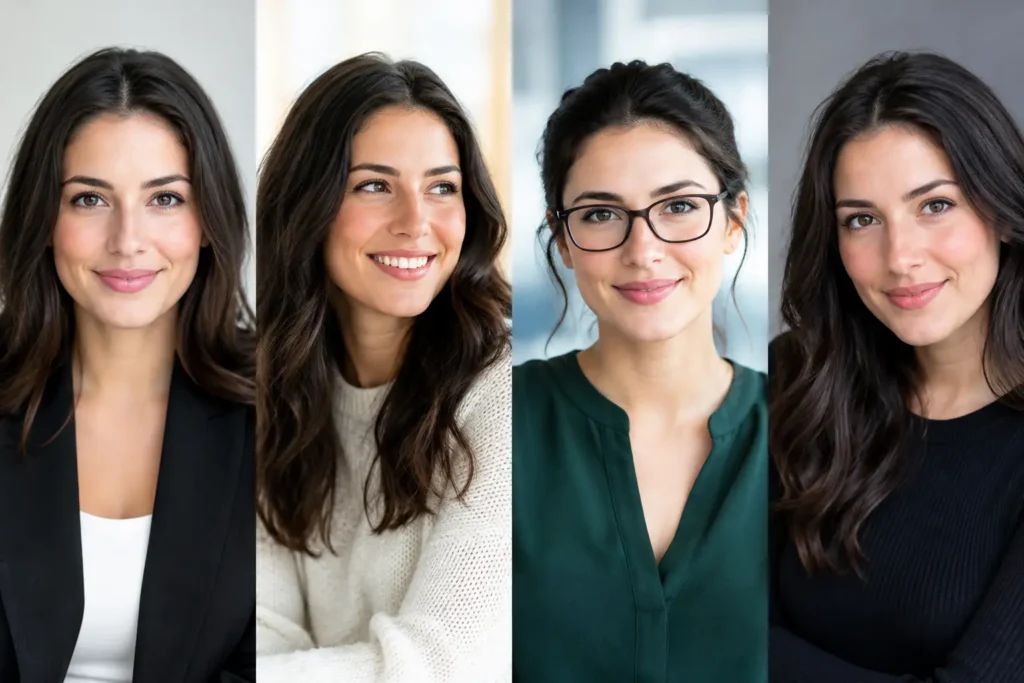
A headshot can feel like a surprisingly personal test. You may love the expression in one image, notice your jawline more in another, and wonder why headshots look different when they were taken only seconds apart. The short answer is that a professional headshot is not just a record of your face. It is the result of light, lens choice, distance, posture, expression, styling, and the connection you have with the person behind the camera.
That is also good news. Once you understand what changes a headshot, you can make better choices for your next session and walk away with images that feel like you on your best, most confident day.
Why Headshots Look Different From What You See in the Mirror
Most people are used to seeing a mirrored version of themselves. Your bathroom mirror flips your face horizontally, and because you see that version every day, it becomes familiar. A photograph shows the unflipped version that other people see. Small differences in eyebrow height, a smile that lifts more on one side, or the way your hair parts can suddenly stand out.
This does not mean the camera is exposing a flaw. Human faces are naturally asymmetrical, and that asymmetry is part of what makes a person recognizable. The adjustment is mostly about familiarity. Give yourself a little time with your images before judging them too quickly, especially if you have not had professional portraits made before.
A headshot also freezes a split second that the mirror does not. In person, people experience your face in motion: the warmth in your eyes, the change in your smile, the way you listen. A strong photographer watches for those micro-moments and helps create an expression that reads as natural even in a still frame.
The Lens Can Change Facial Proportions
Lens choice is one of the biggest reasons two headshots of the same person can look noticeably different. A wider lens used close to the subject can make features nearest the camera appear larger. This may make the nose, forehead, or chin seem more prominent than it does in everyday life. It is not a true representation of your proportions. It is perspective.
For polished portraiture, photographers often use a longer focal length and give the subject more physical distance from the camera. This creates a more flattering, natural-looking perspective while preserving facial shape. The exact choice depends on the intended look. An actor’s theatrical headshot, a fashion-forward modeling portrait, and an executive image for a company website may call for slightly different framing and visual energy.
Cropping matters, too. A tight crop places more attention on the eyes and expression. A wider composition can include posture, wardrobe, and a sense of environment. Neither is automatically better. The right framing is the one that supports the purpose of the image.
Camera Height Changes the Feeling
A camera positioned slightly above eye level can feel approachable and polished. At eye level, it often creates a direct, grounded connection. A low angle may bring more presence and strength, but it can also emphasize the jaw or nostrils if used carelessly.
These are subtle adjustments, yet they influence how a viewer reads the portrait. A thoughtful photographer makes these choices intentionally rather than treating every client with the same setup.
Lighting Shapes More Than You Think
Lighting does not change who you are, but it changes what is emphasized. Soft, broad light can smooth transitions across the skin and create an open, flattering look. More directional light can bring out cheekbones, create depth, and add editorial drama. A brighter background may feel clean and modern, while a darker backdrop can feel more cinematic and focused.
The placement of the light affects the eyes, jawline, skin texture, and mood. Even a small shift in the chin can change where shadows fall under the nose and along the neck. This is why a professional session involves adjustment rather than simply standing in front of a backdrop and smiling.
For actors and performers, clean lighting is often useful because casting teams need to see you clearly and quickly. For models, creatives, and personal-brand clients, more sculpted lighting may better support a distinct visual identity. The goal is not to chase one universal definition of flattering. It is to create a headshot that is appropriate, memorable, and true to the way you want to be seen.
Expression and Pose Are Never Exactly the Same
No two frames are identical because no two expressions are identical. A fraction of a second can be the difference between a smile that feels posed and one that feels genuinely connected. The eyes may brighten when you respond to a prompt, your shoulders may relax after a laugh, or your mouth may settle into an expression that feels calm and self-assured.
This is where direction makes a real difference. Many people arrive convinced they are not photogenic when, in reality, they simply have not been coached through a portrait session. Knowing where to place your chin, how to angle your shoulders, when to soften your mouth, and where to focus your eyes removes the pressure of having to perform on command.
Good direction should never make everyone look the same. It should help you find a version of your natural body language that translates well on camera. A dancer may bring an instinctive sense of line. An executive may need a little help relaxing their shoulders. A teenager building a first modeling portfolio may need reassurance and clear, simple cues. The approach should fit the person.
Styling, Hair, and Makeup Affect the Final Read
Wardrobe can change the feeling of a headshot before the shutter is even pressed. A structured jacket can add authority. A simple solid-color top keeps attention on the face. Texture, neckline, and color all influence where the eye lands and how the image photographs against the chosen background.
Hair and makeup deserve the same practical attention. Makeup that looks perfect in a bathroom can appear different under professional lighting, while overly heavy contouring or very matte products can sometimes read more strongly in a high-resolution image than expected. The best approach is usually polished and camera-ready, while still recognizable as you.
Bring options when possible, but do not overcomplicate the session. Two or three well-chosen looks often provide more value than a large wardrobe that creates unnecessary stress. Your photographer can help identify what works best with the lighting, backdrop, and goal of the shoot.
Editing Refines the Image, Not Your Identity
Professional retouching is another answer to why headshots look different. Editing can remove temporary blemishes, tame flyaway hairs, balance color, refine distractions, and give an image a finished editorial quality. It can also make an image feel more cohesive across a portfolio or team page.
The strongest retouching is usually the least obvious. You should still look like yourself when you walk into an audition, client meeting, agency appointment, or networking event. Over-editing can erase skin texture, alter facial structure, and create a mismatch between your headshot and your real presence. That may look dramatic online, but it rarely serves a professional purpose.
At Michaels Photography, the focus is on refined post-processing that keeps the attention where it belongs: on your expression, confidence, and personality.
How to Get a Headshot That Feels Like You
Start with the purpose. Are you updating an acting submission, seeking agency-ready modeling images, refreshing a business profile, or celebrating a personal milestone? The intended use guides the lighting, wardrobe, background, crop, and overall tone.
Next, communicate honestly about what makes you nervous and what you want the image to convey. If you prefer a softer expression, say so. If you need a headshot that feels confident without looking overly corporate, that is useful creative direction. Bring inspiration if it helps, but leave room for the session to respond to your features and personality rather than copying someone else’s face or style.
Finally, trust the process long enough to relax into it. The best frame often happens after the first few minutes, when your posture becomes easier and the camera stops feeling like the center of attention. A headshot should not make you look like a different person. It should help other people recognize the capable, engaging person they are about to meet.