
A casting director should notice your eyes before they notice your shirt. That is the central rule behind a strong performer headshot wardrobe guide: your clothing should clarify who you are, support the role categories you pursue, and keep the attention exactly where it belongs, on your expression, energy, and presence.
The best wardrobe rarely feels like a costume. It feels like the most polished, camera-ready version of something you would genuinely wear. Whether you are an actor updating theatrical materials, a dancer building an agency-ready portfolio, or a singer preparing promotional images, the goal is not to look overly styled. The goal is to look memorable, current, and unmistakably like yourself.
Start With the Casting Story You Want to Tell
Before choosing colors or pulling garments from your closet, think about the work you want to book. A headshot is a marketing image, and wardrobe helps communicate your type before anyone reads a résumé.
An actor who is often called in for grounded professionals may look strongest in a clean fitted knit, refined button-down, or simple jacket. Someone pursuing comedy, young adult roles, or creative-industry characters may benefit from a slightly more relaxed silhouette and a little more personality in color or texture. A singer might choose a look with more editorial polish, while a dancer may need clothing that conveys line, movement, and physical confidence without distracting from the face.
This does not mean you need to dress as a doctor, lawyer, romantic lead, or ingenue. Literal wardrobe can quickly feel dated or theatrical. Instead, use clothing to suggest a world. The right top can say polished, approachable, athletic, artistic, sophisticated, or warm without saying too much.
If you are updating headshots for more than one casting lane, bring options that create a real shift in impression. A black crewneck and a charcoal crewneck are not two different looks on camera. A tailored jewel-tone top and a relaxed pale blue layer, however, can offer casting teams two distinct sides of your range.
Choose Colors That Keep the Focus on Your Face
Color has more impact in a headshot than most performers expect. The best choice depends on your complexion, hair color, eye color, backdrop, and the mood of the session. A professional photographer can guide the final selection under the studio lights, but arriving with thoughtful options gives you more creative control.
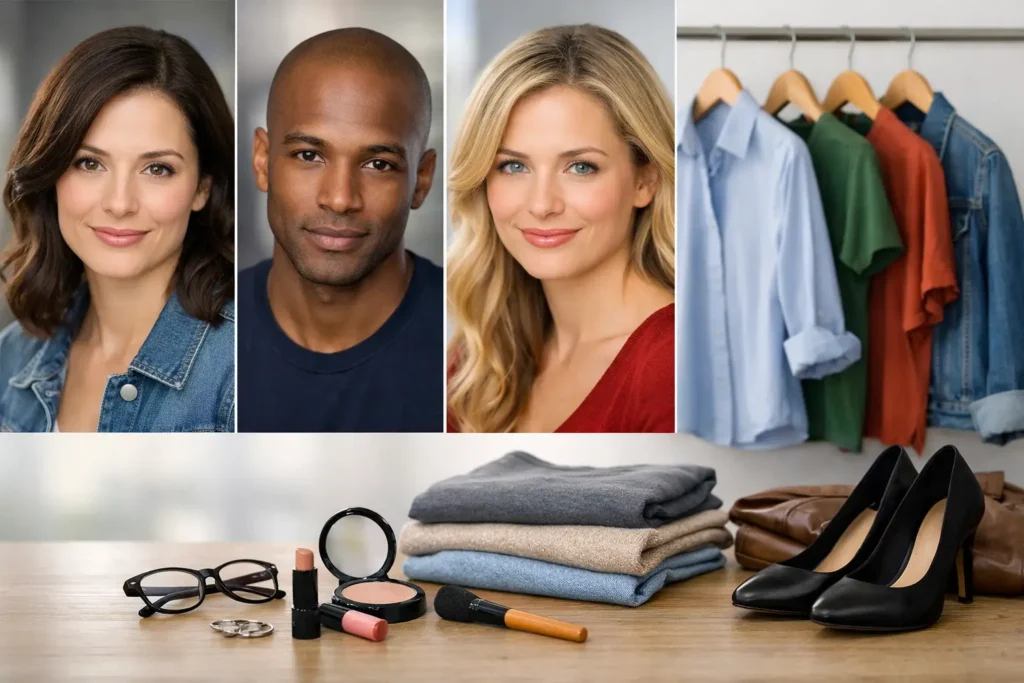
Solid, mid-tone colors are often a reliable place to begin. Rich blue, deep teal, forest green, burgundy, plum, rust, and soft warm neutrals can photograph beautifully because they give the image depth without competing with your features. The ideal shade makes your skin look alive and brings out your eyes.
Black can be elegant and powerful, but it is not automatically the best answer. Against a dark backdrop, it may lose shape. On some complexions, it can make the image feel heavier than intended. White can look crisp, yet bright white may reflect light onto the face or feel too stark. Cream, soft gray, muted blue, or a textured neutral often delivers a more flattering result.
Very bright neon colors, fluorescent shades, and highly saturated red can overwhelm the frame. Small patterns can also create visual noise, particularly checks, narrow stripes, and tight herringbone. They may appear to vibrate or distract when viewed as a small thumbnail on a casting screen.
That said, there is room for personal style. A subtle print, a signature color, or a graphic piece can work when it fits your brand and remains secondary to your face. The question is simple: if someone saw the image for one second, would they remember your expression or the pattern on your clothing?
Bring Options, Not Your Entire Closet
For most headshot sessions, three to five strong options are more useful than an overstuffed garment bag. Bring tops in different colors and necklines, plus one or two layers such as a jacket, cardigan, overshirt, or blazer. This gives your photographer room to build variety while keeping the session moving easily.
Choose pieces that work with the same pants or skirt if you are creating three-quarter-length portraits as well as tight headshots. Keep everything clean, pressed, and free of lint. A beautiful garment that has been folded tightly in a bag can create wrinkles that take attention away from the image.
It also helps to bring a few choices you are not entirely sure about. Under professional lighting, a color that seems quiet in your bedroom mirror may become striking, while a favorite top may photograph flatter than expected. An experienced photographer will assess fit, texture, color, and how each item plays against the planned background.
Fit Matters More Than the Label
Headshot wardrobe should fit your body now, not the version of your body from a few years ago or the one you are planning to have later. Clothing that is too tight can pull at buttons, bunch around the shoulders, or make it harder to breathe and move naturally. Clothing that is too loose may swallow your frame and remove the clean shape that makes an image feel polished.
Pay particular attention to the neckline and shoulders. These areas sit close to the face and appear in nearly every crop. A neckline that feels flattering can lengthen the neck, frame the jawline, and bring attention upward. Crewnecks, V-necks, open collars, mock necks, square necklines, and simple off-the-shoulder shapes can all work, depending on the performer and the casting story.
Avoid necklines that require constant adjustment. If you are tugging at a strap or smoothing a collar between frames, that tension can show in your expression. You should feel comfortable enough to forget about the clothing once the camera is up.
For dancers and movement-based performers, consider how a garment looks when you shift your weight, turn your shoulders, or extend through the spine. Structured pieces can be beautiful, but they should not restrict the physical ease that makes a dancer compelling on camera.
Use Layers and Texture With Intention
A layer can add dimension and give one wardrobe option several variations. A fitted jacket can read more confident and professional; removing it can reveal a softer, more open look. A denim or leather jacket may suit an editorial or contemporary casting lane, while a blazer, textured cardigan, or clean overshirt can offer refinement without looking corporate.
Texture is valuable because it photographs as depth. Think fine knits, suede-like finishes, linen blends, denim, or subtle ribbing. Keep texture controlled, especially in a close crop. Heavy fringe, oversized bows, shiny sequins, large logos, and stiff statement collars can take over the image.
Jewelry deserves the same restraint. Small earrings, a delicate chain, a watch, or a meaningful ring can add personality. Large reflective earrings or necklaces can pull attention from your eyes and create unpredictable highlights under studio lighting. If an accessory is part of your identity, bring it, then let the final choice be guided by what works in the frame.
Think Beyond the Shirt
Wardrobe preparation includes everything visible at the edges of the image. Check bra straps, undershirts, lint, pet hair, loose threads, and transparent fabrics before you leave home. If you are wearing glasses, bring them if they are part of how casting usually sees you. Clean the lenses carefully, and let your photographer manage reflections through lighting and angle.
Shoes may not appear in a close headshot, but bring a clean pair if you are including full-length or movement images. They affect posture and can complete the character of an editorial portrait. For performers who work in dance, bring the footwear that best supports the style you are representing, along with a second pair if the session includes varied looks.
Hair and makeup should work with the wardrobe rather than compete with it. The camera responds well to intentional grooming, but headshots should still look like you on a great day. If you wear makeup, choose a finish that enhances skin and defines features without masking your natural expression. If you do not usually wear much makeup, there is no need to become unrecognizable for the session.
Let the Camera Test Make the Final Call
A mirror can tell you whether an outfit fits. It cannot tell you how the garment will respond to professional lighting, lens choice, backdrop color, and your particular expressions. That is why personal direction during the session matters. A top may look excellent standing still but create an awkward line when you tilt your head or turn toward the light.
At Michaels Photography, Michael helps performers narrow their options in real time, pairing a creative, editorial eye with practical coaching so the final images still feel natural and castable. The strongest wardrobe is not simply fashionable. It works with the light, supports your range, and lets your confidence come through without effort.
Give yourself permission to choose what feels true, not what you think a headshot is supposed to look like. When your wardrobe supports rather than performs for the camera, you can stop worrying about the outfit and give casting the thing they came to see: you.