
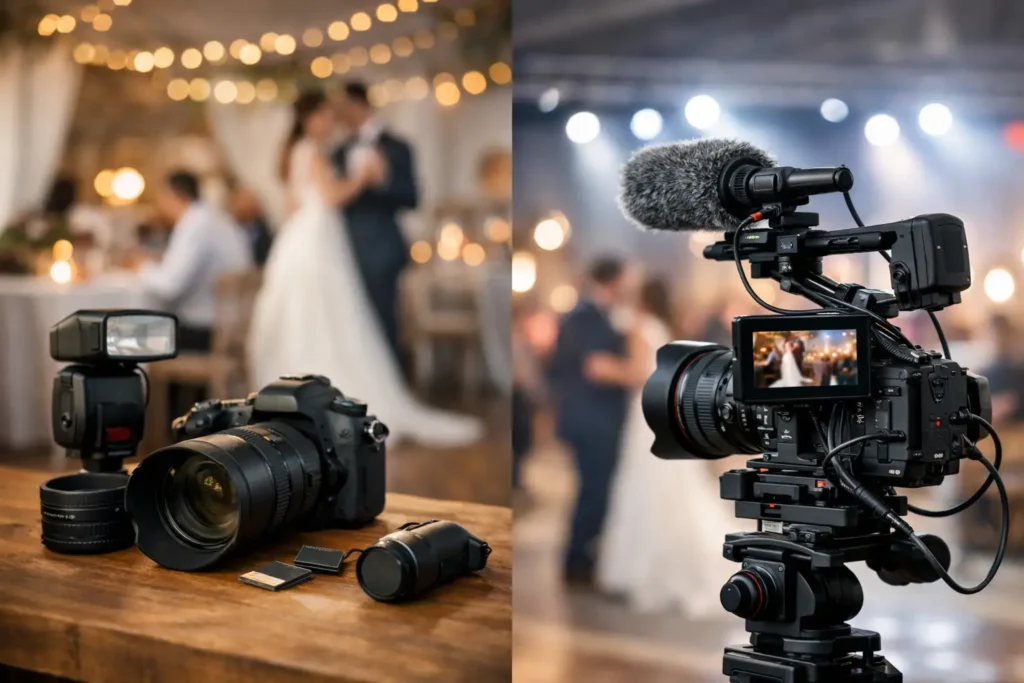
A champagne toast lasts seconds. A child’s expression during a family portrait changes just as quickly. The right photography versus videography packages do more than document the occasion, they decide how you will return to it years from now. One gives you a frame you can hold onto, print, share, and study. The other brings back the movement, voices, music, and energy surrounding that frame.
For a wedding in the Hudson Valley, a milestone party in Westchester, a fashion portfolio in Manhattan, or a polished commercial campaign, the best choice depends on what you want the finished work to accomplish. There is no universal answer, and a package should never be chosen by hours alone.
Photography Versus Videography Packages: The Real Difference
Photography turns a split second into a finished visual statement. It is especially powerful when expression, styling, lighting, and composition matter. A confident headshot can help an actor make a strong first impression with an agent. A carefully lit product image can make a brand look more premium. A family portrait can become part of a home’s visual history.
Videography captures progression. It records the groom’s reaction as the ceremony begins, the rhythm of a dance performance, the applause after a speech, or the way a room feels when everyone is celebrating. Sound can make video deeply personal, particularly for vows, tributes, interviews, and brand storytelling.
The practical difference is in how people use the final assets. Professional photographs are easy to print, frame, submit to agencies, place on a website, use in marketing, or share individually. Video is ideal when the atmosphere, narrative, performance, or voice is central to the memory or the message. A well-edited highlight film can make someone who was not there feel close to the experience.
Neither medium is automatically more meaningful. A quiet black-and-white portrait may carry more emotional weight than a five-minute film. Conversely, no still image can reproduce a grandparent’s laugh during a toast. The question is not which medium is better. It is which one protects the part of the experience you cannot afford to lose.
When Photography Should Lead
Photography deserves priority when still images are the primary deliverable, the event is visually detailed, or you need polished assets for an immediate purpose. Portrait sessions, modeling portfolios, theatrical headshots, fashion editorials, real estate, jewelry, and product work generally need photography to lead the plan.
For talent, a package should allow time for creative direction, wardrobe changes, varied expressions, and refined retouching. Models and performers do not simply need more images. They need images with a clear point of view that feel current, versatile, and agency-ready. Video can be a wonderful addition for movement-based artists, but it should not reduce the time needed to create exceptional stills.
At events, photography is often the best first investment when guests expect group portraits, candid interactions, detail shots, and images they can enjoy quickly afterward. An experienced photographer can move between formal moments and unscripted laughter while keeping portraits organized and relaxed. Those photographs become the images people save, post, print, and pass along to family.
Photography also makes sense when discretion matters. Some corporate gatherings, intimate celebrations, and private family occasions benefit from coverage that feels present but never intrusive. A compact photography team can capture the story without changing the pace of the room.
When Videography Is Worth the Investment
Videography becomes essential when sound and movement are the story. Weddings are the clearest example: vows, speeches, first dances, and live music are moments you experience differently when you can hear them again. The same is true for dance recitals, musical performances, business interviews, launch events, and behind-the-scenes creative work.
For brands, video can create trust quickly. A founder speaking about a product, a designer explaining a process, or a customer interacting naturally with a service gives audiences context that still images cannot provide on their own. Short vertical clips may also be useful for social content, while a longer film can support a website presentation or campaign.
That said, videography requires thoughtful planning. Clean audio may require microphones. A cinematic look may require more lighting, a second camera, additional crew, and time for edited storytelling. At a fast-moving party, a videographer must work around guests, speakers, DJs, and changing light without interrupting the event. A lower-priced video package that does not account for these realities may result in shaky footage, unclear sound, or an edit that feels generic.
Ask what kind of film is being promised. Raw footage, a short highlight reel, full ceremony coverage, social clips, and a documentary edit are very different deliverables. A two-minute highlight can be beautiful, but it will not preserve every speech in full. Clarity before the event prevents disappointment later.
Choosing a Combined Photo and Video Package
Combined packages are often the right choice for weddings, large celebrations, performances, and brand events where both visual polish and lived atmosphere matter. The advantage is not merely receiving two kinds of content. It is having a coordinated plan.
When photo and video professionals work together, they can anticipate key moments, avoid blocking one another, and use the available time efficiently. During portraits, for example, the team can capture editorial-quality photographs while recording natural movement and candid interaction. During a ceremony, one professional can prioritize the wide visual story while another protects close reactions and audio.
A combined package should still be scaled to the event. A small engagement party may need a lead photographer and a concise video highlight. A full wedding day may require multiple photographers, multiple videographers, audio coverage, and enough editing time to do the footage justice. For a commercial shoot, the plan may call for a photographer focused on hero images and a separate video team capturing motion assets for a campaign.
The trade-off is budget. If adding video forces you to reduce photography coverage below what the day requires, choose the medium that serves your most lasting goal. It is better to have complete, beautifully photographed ceremony and family portraits than partial coverage in two formats. If the vows and speeches are nonnegotiable, allocate the budget to video and audio accordingly.
What a Thoughtful Package Should Include
The strongest packages are shaped around the schedule, setting, and final use of the work. Before comparing prices, look at the deliverables and the experience behind them. Coverage hours matter, but they are only one part of the value.
For photography, ask about the number of edited high-resolution images, turnaround expectations, online gallery delivery, retouching, print options, second photographers, and whether there is time built in for guided portraits. For videography, confirm the final film length, audio coverage, number of cameras, social-media versions, delivery timeline, and whether full speeches or ceremony footage are included.
Lighting deserves attention in both mediums. A dim reception room, a sunlit rooftop, or a venue with mixed indoor lighting can look dramatically different depending on the professional’s preparation. High-end results are rarely accidental. They come from knowing how to shape light, direct people with ease, and adapt without making clients feel like they are on a production set.
It also helps to discuss priorities before the day arrives. If your grandmother is traveling in for the celebration, say so. If a model needs one strong beauty image for a comp card, make that clear. If a business needs product close-ups, founder footage, and team portraits for a launch, outline how every asset will be used. Good creative direction begins with listening.
Match Coverage to the Memory You Want to Keep
Consider the moment you would be most disappointed not to have. For some clients, it is the expression in a parent’s face during a first look. For others, it is the sound of a child reading a poem, a dancer’s full routine, or a founder explaining why the business exists.
If you want images that feel polished, personal, and ready to live on walls, websites, portfolios, and family albums, lead with photography. If you want to relive voices, motion, and the pace of the day, invest in videography. If both matter equally, build a coordinated package that gives neither medium an afterthought.
The best coverage should feel easy while it is happening and extraordinary when you receive it. With thoughtful planning and a creative team that understands your priorities, you can stay present for the moments themselves while knowing they are being preserved with care.