
A great headshot can open a casting director’s email, make an agency stop scrolling, or help a client feel they already know the person behind a business. That is why the question “what to wear headshots” comes up before almost every session. Your clothing should support the real star of the image: you. The right look brings out your eyes, frames your face, and gives the final portrait a polished, intentional feel without looking over-styled.
The best choice is rarely the trendiest outfit in your closet. It is the one that fits beautifully, feels natural when you move, and reflects the role, brand, or personality you want people to see. Whether you need agency-ready modeling images, theatrical headshots, a LinkedIn portrait, or a creative personal brand session, a little planning makes the camera experience easier and the results more memorable.
What to Wear for Headshots Starts With Your Goal
Before choosing colors or accessories, think about where the image will live. Actors and performers often need a look that feels approachable, believable, and true to their casting range. A clean top with a flattering neckline is usually more effective than a complicated fashion statement. If you are updating a modeling portfolio, you may have more room for editorial styling, texture, and a strong silhouette.
For business headshots, dress one level above what you normally wear when meeting an ideal client. A financial professional may feel most credible in a refined jacket or tailored blouse, while a designer, therapist, or entrepreneur may want a more relaxed but still elevated look. The goal is not to dress like someone else. It is to present the most confident, polished version of yourself.
If your headshots serve more than one purpose, bring options. One look can be clean and classic, while another can introduce more personality. A photographer can help you decide which outfit works best with the lighting, backdrop, and mood of the session.
Choose Colors That Keep Attention on Your Face
Solid colors are a dependable starting point because they photograph cleanly and keep the image from feeling busy. Jewel tones such as deep blue, emerald, burgundy, plum, and rich teal often create a high-end finish. Softer shades like dusty rose, slate blue, muted olive, or warm cream can feel equally beautiful when they suit your skin tone and the intended mood.
Black is elegant and flattering for many people, especially in a more dramatic or editorial portrait. Still, it can absorb detail against a dark backdrop. If black is your favorite, consider bringing a second option in a color that brings more light toward your face. White can look fresh and modern, but bright white sometimes reflects light strongly and can feel stark. Off-white, ivory, soft gray, and pale blue are often gentler alternatives.
There is no single color rule that works for everyone. Skin tone, hair color, background, and the type of work you want all matter. When in doubt, hold a few tops near your face in natural window light. The strongest choice usually makes your eyes look brighter and your complexion look even, rather than drawing attention to the garment first.
Fit Matters More Than the Label
Camera-ready clothing should fit now, not someday. A shirt that pulls at the buttons, a jacket with overly broad shoulders, or a neckline that constantly needs adjusting can make you self-conscious during the session. That tension can show in your expression.
Choose pieces that skim the body and allow you to sit, stand, turn, and breathe comfortably. Tailoring is worth considering for a favorite blazer, dress, or shirt that is nearly perfect. Small adjustments around the shoulders, waist, or sleeves can create a much more intentional shape in photographs.
Necklines deserve special attention because they sit closest to your face. Crew necks, V-necks, open collars, mock necks, and simple scoop necks can all work well. The most flattering option depends on your proportions and comfort level. Avoid a neckline that is so low, high, loose, or distracting that it pulls focus away from your expression.
Bring Clothes That Are Fresh and Camera-Ready
Steaming is not a minor detail. Cameras notice wrinkles, lint, pet hair, loose threads, and missing buttons more than most mirrors do. Prepare your options the night before, transport them on hangers if possible, and bring a lint roller. For a premium headshot, those finishing touches are part of the visual standard.
Use Patterns, Layers, and Accessories With Intention
A small, subtle pattern can add interest, but large logos, busy florals, narrow stripes, and high-contrast prints can compete with your face or create distracting effects on camera. If you love print, choose one with a larger scale and muted color contrast, then bring a solid alternative.
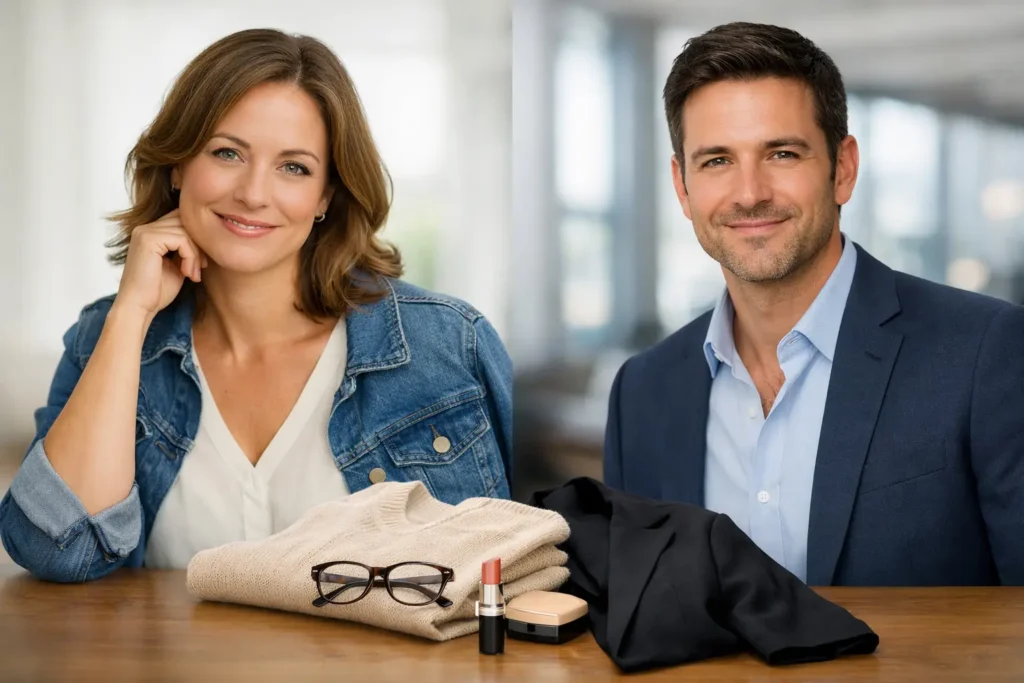
Layers are one of the easiest ways to create variety without needing a full wardrobe change. A fitted blazer, lightweight jacket, cardigan, overshirt, or textured sweater can shift the tone of a look quickly. They also give your hands something natural to do in three-quarter portraits. Keep the layer structured enough to hold its shape rather than bunching around the neckline or shoulders.
Accessories should feel like part of your everyday style, only slightly refined. Small earrings, a simple necklace, a watch, or a meaningful ring can add personality. Avoid anything that clanks, catches light aggressively, or feels visually louder than your eyes. If you are unsure, bring the accessory and decide once you see the outfit in the studio.
For glasses, wear them if they are part of how people recognize you. Clean the lenses carefully and let your photographer know in advance. Professional lighting can be adjusted to reduce glare, and it is often better to look like yourself than to leave out a signature detail.
What Not to Wear in Headshots
The issue is not that certain clothes are forbidden. It is that some choices create unnecessary distractions. Clothing with prominent branding can date the photo quickly and make the image feel like an advertisement for someone else. Extremely trendy pieces may be perfect for a fashion editorial but less useful for a business profile or actor submission that needs to work for several years.
Very shiny fabrics can create bright hotspots under studio lighting. Thin, clingy materials may reveal lines from undergarments or shift as you pose. A full outfit in one flat, dark color can also lose dimension, particularly against a dark setting. These are manageable trade-offs, not automatic dealbreakers, but they are good reasons to bring options.
Avoid borrowing an outfit that does not feel like you just because it seems professionally correct. If you never wear a suit, wearing a stiff one for the first time in your headshot may make your expression look guarded. A photographer can guide your posture and energy, but confidence starts with feeling at home in what you are wearing.
Plan Two or Three Looks, Not Ten
More outfits do not always create more useful images. A focused selection gives you time to settle into the session and explore expression, angles, and connection with the camera. For most headshot sessions, two or three well-chosen looks are more valuable than a suitcase full of maybes.
A practical combination might include a polished neutral, a color that makes your eyes stand out, and one look with a little more character. Actors may choose an approachable casual top plus a slightly sharper option. Professionals may pair a jacket-and-blouse combination with a softer, less formal layer. Models can include a clean beauty look and a bolder editorial choice, depending on agency needs.
At Michaels Photography, the process is never about forcing you into a preset look. Michael takes time to understand your goals, offer clear direction, and create a comfortable environment where your confidence can come through naturally. The clothes set the tone, but authentic expression is what makes an image feel unforgettable.
The Best Outfit Is One You Can Forget About
Once the session begins, you should not be tugging at your sleeves, worrying about a neckline, or wondering if a bold print was a mistake. You should be present, relaxed, and ready to connect with the camera. That is when professional lighting, thoughtful coaching, and a creative editorial eye can do their best work.
Lay out your strongest options, choose the pieces that make you stand taller, and arrive ready to be seen. The right headshot wardrobe does not hide who you are. It gives the person viewing your photo a clear, confident reason to look closer.