

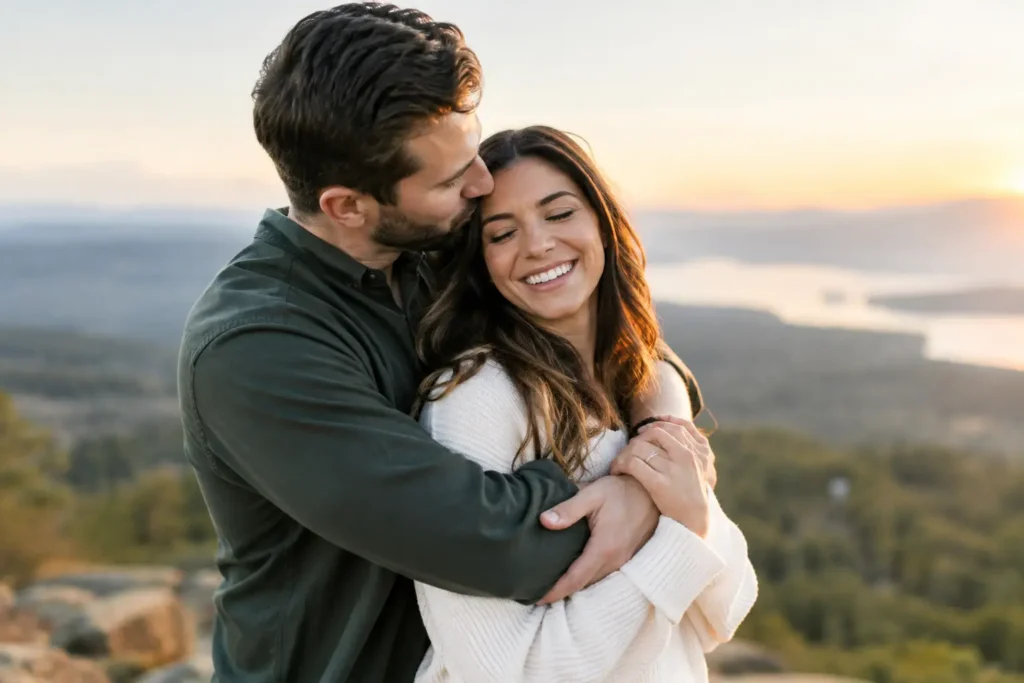
The best engagement photos do not look like you borrowed someone else’s romance for an afternoon. They look like your connection, elevated: the way you make each other laugh, the neighborhood you love, the outfits that make you stand a little taller. Learning how to style engagement photos is less about following a rigid formula and more about choosing details that feel honest while giving your images a polished, editorial finish.
An engagement session is also a welcome chance to get comfortable in front of the camera before your wedding day. With a little intention around wardrobe, location, and timing, you can arrive ready to enjoy the experience rather than worrying about every pose.
How to Style Engagement Photos Around Your Real Life
Start with the atmosphere you want to remember. A couple who spends weekends exploring the Hudson Valley may feel most at home in a scenic overlook, a quiet riverfront, or an estate-like setting with room to move. A couple who loves the energy of New York City might choose a brownstone block, a favorite café street, a modern gallery district, or an iconic waterfront view.
There is no universally “best” engagement-photo style. The right one reflects what you genuinely enjoy together. Ask yourselves a few simple questions: Do we want images that feel relaxed and candid, refined and fashion-forward, romantic and timeless, or a little playful? Are we dressing for a date night, a city stroll, or a meaningful outdoor escape?
Once you know the mood, each decision becomes easier. Your location, clothing, hair, and small personal details should feel like they belong in the same visual story.
Choose Outfits That Coordinate, Not Match
Matching outfits can look dated quickly. Coordinating, on the other hand, photographs beautifully. Begin with two or three colors that complement each other, then vary the tones and textures within that palette. Think soft blue with cream and tan, rich jewel tones with charcoal, or black and neutrals warmed up with camel, olive, or burgundy.
Solid colors are usually the most reliable choice because they keep the attention on your expressions and connection. Subtle patterns can work well, especially when only one person wears them. If one partner chooses a patterned dress, skirt, or shirt, the other can wear a solid color pulled from that pattern. Avoid putting both people in busy prints, prominent logos, or extremely small stripes, which can compete with the image or photograph inconsistently.
Fit matters just as much as color. Choose clothing that lets you sit, walk, hug, and lean into each other without constant adjusting. A beautiful outfit that requires tugging at a neckline or smoothing fabric every few minutes can make you feel less present. Before the session, try on the complete look, including shoes and undergarments, and move around in it.
For many couples, two looks offer the best balance. Start with an elevated, more polished outfit, then change into something softer or more casual. A flowing dress paired with a tailored jacket or button-down has an editorial feel, while jeans with refined knitwear can create intimate, natural images. The key is contrast in formality without becoming two entirely different versions of yourselves.
Favor texture and movement
Photography loves dimension. Linen, silk, wool, suede, soft knits, and structured cotton add visual interest without overwhelming the frame. A dress or skirt that moves in a light breeze can create beautiful motion, while a well-fitted blazer, coat, or leather jacket adds shape and confidence.
Consider the season, too. Bare shoulders may look wonderful in summer but can make a fall session feel uncomfortable. A great coat, scarf, or layered jacket can be part of the style rather than an afterthought. When you are comfortable, it shows.
Let the Location Support the Story
A location should offer more than a pretty background. It should give your images variety, privacy when possible, and room for natural interaction. A quiet park can provide open light, textured paths, and space to walk hand in hand. An urban location can offer architecture, reflections, clean lines, and a more fashion-inspired edge.
For New York-area couples, timing is especially important. Popular places may be crowded, and some locations require permits or have photography restrictions. Choosing a spot with a few nearby visual options can help create a fuller gallery without spending the entire session in transit.
You do not need to select a place with personal history for it to feel meaningful. A beautiful location can become part of the memory because it is where you celebrated this season of your life. Still, if you have a favorite neighborhood, a first-date area, or a weekend place you return to often, that familiarity can help you relax quickly.
Add Personal Details Carefully
A few meaningful touches can make engagement photos feel unmistakably yours. Bring a favorite bottle of champagne for a celebratory moment, a vintage car if it is part of your story, or a small bouquet that complements your color palette. If your dog is family, including them for a portion of the session can create joyful, candid images.
Keep props purposeful. Too many objects can turn a portrait session into a set design project and pull focus from the two of you. The strongest detail is usually your engagement ring, especially when it is photographed naturally as you hold hands, adjust a jacket, or rest your hand on your partner’s shoulder.
Prepare for a Camera-Ready Finish
Professional styling does not mean looking unlike yourself. It means choosing grooming details that hold up beautifully in photographs. Schedule haircuts and color appointments several days before the session rather than the day of. If you are considering professional hair and makeup, choose a look that feels like your most confident self, with slightly more definition than your everyday routine.
Bring a small touch-up kit with lip color, powder or blotting papers, a hairbrush, and anything you may need for quick wardrobe adjustments. Comfortable walking shoes are also useful, even if your final look includes heels or dress shoes. You can change when you reach the best part of the location.
Think about the small things that may show in close portraits: clean nails, wrinkle-free clothing, polished shoes, and removing bulky items from pockets. These details are not about perfection. They simply help keep the focus where it belongs.
Trust Movement More Than Posing
You do not need to know how to pose before your engagement session. In fact, the most natural images often happen between poses: when you are walking, laughing at an inside joke, fixing each other’s collar, or pausing close together without thinking too hard about the camera.
A photographer’s direction should make you feel supported, not stiff. At Michaels Photography, Michael provides hands-on creative direction while leaving room for the unscripted moments that make a gallery feel personal. Expect guidance on where to stand, what to do with your hands, and how to create flattering angles, then let yourselves respond naturally to each other.
If you feel awkward at first, that is completely normal. Give yourselves permission to be a little silly. A genuine laugh will always photograph better than trying to hold a serious expression for too long.
Plan for Light, Weather, and Real Life
Golden hour, the period shortly before sunset, is popular for a reason. The light is soft, warm, and flattering, especially for outdoor portraits. But overcast skies can also be beautiful, creating even light and a more cinematic mood. Midday sun can work in the right setting, particularly with shade, architectural elements, or professional lighting.
Watch the forecast, but do not panic over a few clouds. Consider a backup plan for rain, wind, or extreme heat, especially if your session is scheduled around a tight wedding timeline. For city sessions, build in extra travel time and arrive early enough to settle in without rushing.
The outfit, setting, and light should all serve one purpose: helping you feel fully present with the person you chose. Wear what makes you feel confident, go somewhere that gives you room to connect, and let the moments between the planned shots become part of the story you keep.